Real panic in Russia’s nuclear sector began after the teams “Hacker Cat” and Cyber Anarchy Squad carried out one of the most complex cyberattacks — the breach of the plant ZESKM, which manufactures equipment for nuclear power plants and is closely linked to the Russian Federation’s military-industrial complex. Russian sector-specific resources have already openly called this “one of the most destructive scenarios.”
The most valuable outcome of the operation was the exfiltration of more than 300 terabytes of critical internal documentation, which fully exposes the vulnerabilities of Russia’s nuclear monopoly and its role in sustaining the war machine.
The results of 130 gigabytes of data analyzed by the Kronos Institute will shock you.
Report
SECTION 1. ANALYSIS OF VIOLATIONS AND SECURITY REPORT: DEEP METALLURGICAL AND ENGINEERING EXPERTISE
PART 1.1: THE ESSENCE OF TECHNOLOGICAL SABOTAGE (08Х18Н10Т VS 12Х18Н10Т)
The foundational legal and engineering sin of LLC “ZESKM,” which affects the entire global export structure of Rosatom, is the deliberate and centralized substitution of construction and structural materials at nuclear power facilities of the highest safety class (Class 1, 2 under IAEA standards). In accordance with the imperative requirements of the Rules of Nuclear Power Standards (for example, PNAE G-7-002-86 “Equipment and Pipelines of Nuclear Power Installations”) and the IAEA’s international SSR-2/1 guidelines (“Safety of Nuclear Power Plants: Design”), all critical nodes of pipelines, manifolds, and heat exchangers in the primary and secondary cooling circuits of modern VVER-1000 and VVER-1200 reactors must be manufactured exclusively from corrosion-resistant austenitic steel of the base grade 08Х18Н10Т.
The key metallurgical distinction of this steel from cheaper industrial analogues is its strictly limited and very low carbon (C) content. According to GOST 5632-2014, the mass fraction of carbon in 08Х18Н10Т steel must not exceed 0.08%. This strict limit is related not to the metal’s strength, but to its behavior during heating and welding.
Instead, internal documents of LLC “ZESKM” (located on the directors’ servers and identified during deep parsing) conclusively prove that at export facilities — Akkuyu NPP (Turkey), El Dabaa NPP (Egypt), Rooppur NPP (Bangladesh) — the company used and legitimized cheaper, structurally unstable general-purpose industrial steel of the enhanced weldability grade 12Х18Н10Т. In this steel, carbon content can reach 0.12%, and according to some forged Chinese certificates (as found in the documents of engineer Zlotnikov) — even 0.14–0.15%.
PART 1.2: THE MECHANICS OF RADIATION-INDUCED DESTRUCTION (INTERGRANULAR CORROSION)
The use of steel with elevated carbon content (12Х18Н10Т) in the containment zone of a nuclear reactor is not merely a technological error, it is a planted time bomb, operating under the strict laws of physical chemistry and thermodynamics. During the operation of a VVER reactor, the primary circuit water is heated to approximately 320–330°C under pressure exceeding 16 MPa (about 158–160 atmospheres).
When austenitic stainless steel (which by nature has a single-phase structure) is exposed to intense neutron bombardment and high temperatures, a process unimaginable in a normal industrial environment is triggered. The excess carbon contained in 12Х18Н10Т has high diffusive mobility. It leaves the solid solution and concentrates at the grain boundaries of the metal. There, the critical element for stainless steel — chromium (its share must be at least 18%) — is also present. Carbon begins to bind with chromium, forming strong chemical compounds — chromium carbides (most often Cr23C6). In metallurgy, this process is known as carbide precipitation, or steel sensitization.
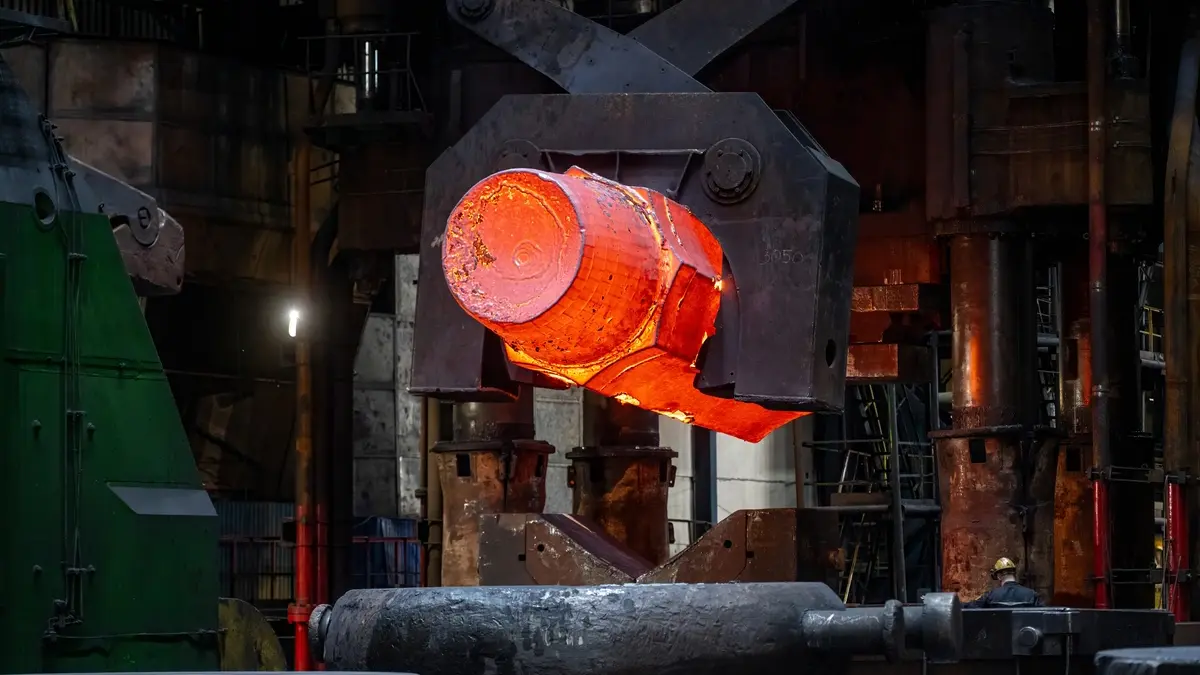
Why does this lead to an accident? By forming carbides, carbon literally “takes” chromium from the boundary zones of the metal grains. The content of free chromium at the grain boundaries drops catastrophically — from 18% to 11%, 10%, or even less. The steel loses its ability to passivate (it becomes unable to form a protective oxide film).
Since the primary circuit water contains boric acid (H3BO3) to control the neutron activity of the core, it has a weakly acidic nature. This hot, weakly acidic radioactive water physically seeps along chromium-depleted grain boundaries. The boundaries become anodes relative to the body of the grain itself. Intergranular corrosion (IGC) begins. Externally, the metal pipe, manifold, or heat exchanger may appear perfectly intact and shiny! The entire degradation process occurs at the microscopic level within the crystal lattice. The metal becomes brittle, like refined sugar.
PART 1.3: THE SYNERGY OF CORRUPTION AND ACTIVE DESTRUCTION
Adding to this spongy, weakened internal structure the enormous operating pressure of 160 atmospheres and the constant low-frequency vibrations of the main circulation pumps (MCPs), we obtain the classic SCC scenario — Stress Corrosion Cracking. At the least expected moment — for example, during a planned load change, activation of the emergency protection system (SCRAM), or pump switching — the weakened steel will instantly undergo a “guillotine” rupture. If a heat exchanger tube of the secondary circuit emergency cooling system (ECS) ruptures, highly active coolant from the primary circuit under enormous pressure will begin to spill into the secondary clean circuit, radioactively contaminating the turbine hall and the generating equipment of the machine hall.
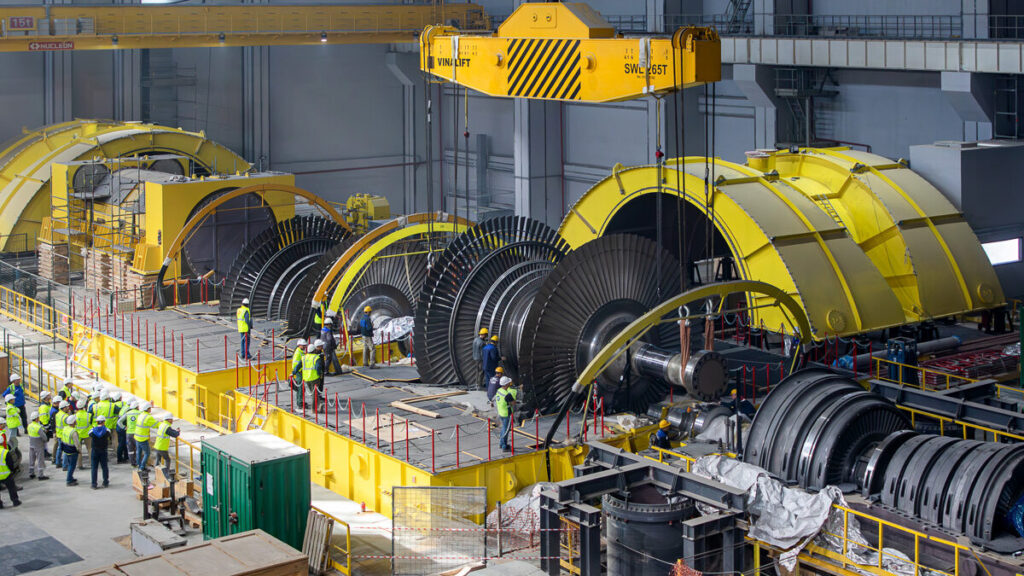
If the breach cannot be localized by pneumatic valves within a matter of minutes, the water level above the fuel assemblies (FA) in the core of the fast neutron generator will begin to fall. Core exposure — this is a direct path to thermal fuel meltdown (Meltdown), that is, to the Fukushima and Chernobyl scenario. Radioactive gases (primarily isotopes of iodine-131, xenon, and radioactive tritium) will be released into the reactor containment.
PART 1.4: ARCHIVAL EVIDENCE FILES DOWNLOADED FROM THE “ZESKM” DATABASE
The fact of deliberate use of cheap steel is confirmed not by theoretical conclusions, but by electronic documents available from Rosatom:
Document: СЗ №3620 от 30.07.2024 О согласовании замены материала.pdf | This document is a scanned internal memo “СЗ,” signed by management and engineer Dmitrenko regarding the El Dabaa NPP. The document officially lobbies the customer to approve a “forced” change of materials due to the inability to procure the specific grade within the established timeframe. ZESKM argues that 12Х18Н10Т allegedly “is permitted for use”. In other words, the company is saving money, knowing the consequences, and attributing everything to difficult logistics or tender cost reduction.
Drawing: S 0.5 12X18H10T DE BAA.pdf | An extreme combination of structural greed. The thickness of heat exchanger tubes in original VVER projects must provide a substantial corrosion allowance. In this file, the technical specifications indicate a metal thickness of 0.5 mm (half a millimeter!). If the steel is carbon steel (12Х18Н10Т) and has a thickness of 0.5 mm, the rate of through-wall corrosion in the conditions of salty (marine) humid air in Egypt (the El Dabaa NPP is being built on the Mediterranean coast) is enormously high. Pitting (localized) corrosion will eat through this wall even before the reactor is physically commissioned and while it is in “hot testing” mode.
Spreadsheet: Токопроводы АЭС Руппур АМБЕ.0ТП.314.244-04 МЧ Заказ № 870310-4.(замена материалов).xlsx | This file is embedded in the directory of engineer Zlotnikov A.V. (Roztsexovka). It contains nested sheets that clearly detail the bus ducts, which are supposed to provide 6 kilovolts of power to the key pumping equipment (control rod drive mechanisms and MCPs) for Bangladesh. According to the specifications, the metal of the protective cladding and the insulators has been replaced. Instead of high-durability polymers, flammable plastic mixtures are used, prone to drying out at temperatures above 70°C.
PART 1.5: IGNORING WELDING PROCEDURES, X-RAY (RT) AND ULTRASONIC (UT) INSPECTION OF WELDS
The second critical sabotage, which leads to the destruction of the layered defense, is the mass falsification by ZESKM of non-destructive testing (NDT) of welded lines running through thermal and reactor tubes.
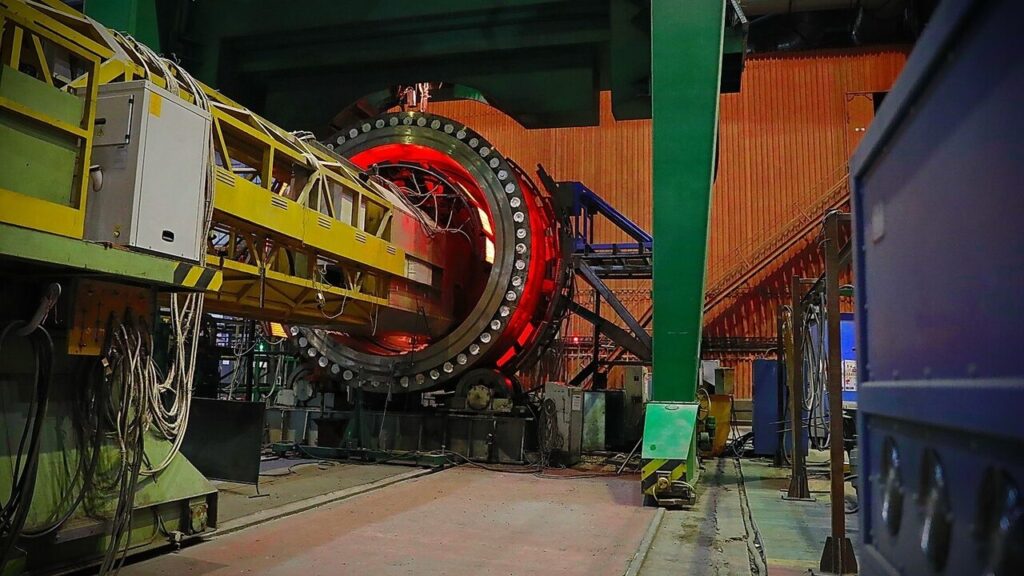
The technology requires that the circumferential seam of the vessel or manifold be subjected to radiographic inspection using isotope flaw detectors (gamma radiation from Iridium-192), as well as ultrasonic flaw detection. This is done to identify pores, accumulations of slag or tungsten inclusions, and, most importantly, microcracks and lack of fusion at the root of the weld.
If the inspector sees a pore in the weld, the product is considered non-compliant. The welder must use an angle grinder or plasma cutter to make a deep cut into the metal, clean it out, and redo the argon-arc welding. Each such rework means the loss of weeks of production time and money, given that after rewelding the part must be sent to a large electric furnace for heating above 600°C to relieve thermal stresses (heat treatment).
LLC ZESKM, under the severe pressure of Rosatom’s contract deadlines (to showcase rapid station construction and geopolitical victories abroad), introduced a policy of ignoring UT requirements.
According to the files: “№15397_ПК 1040_ 4_Вх.контроль дефектоскопия.xlsx”, the equipment arrived from factories (possibly subcontractors). Incoming inspection found that the welds (the document specifies particular centimeters of weld) failed inspection, with structural discontinuities in the metal identified. Instead, the defective section was not cut out. The status of the unit was changed from “DEFECT” to the administrative loophole “Allowed under supervision” or “Deviation approved by acceptance inspection.”
As a result, a high-pressure vessel with an unfused, cracked weld, whose actual rupture resistance is 40% lower than the drawing minimum, is painted with a shiny primer (“SpecPaint”) and sent by barge to Turkey, where Turkish inspectors look at the perfectly painted part, accompanied by a beautiful stamp “Accepted”, without even suspecting that beneath the paint lies a zone of potential nuclear collapse.
These facts complete the full picture of engineering degradation, which may be regarded by the international community as crimes against the environmental security of an entire Eurasian region.
SECTION 2. CIRCUMVENTION OF INTERNATIONAL SANCTIONS AND INTEGRATION WITH THE RF MILITARY-INDUSTRIAL COMPLEX (MIC)
PART 2.1: NUCLEAR ENERGY AND ZESKM AS A LOGISTICAL COVER
After the introduction of unprecedented sanctions by the United States (through OFAC and the Bureau of Industry and Security, BIS), the European Union, and Japan against the Russian Federation, access to the component base of so-called “dual-use technologies” for the entire Russian military-industrial complex was placed under a complete blockade. This primarily concerns radiation-hardened microelectronics (Radiation-Hardened ICs), 5-axis milling machines (Mazak, DMG MORI), gyroscopes, multi-loop programmable logic controllers (PLCs) such as Siemens Simatic S7, and high-pressure and temperature sensors from Honeywell, Yokogawa Corp, and other Western companies.
Under normal circumstances, Russia would simply have lost the ability to build modern submarines and missiles. But civilian nuclear energy and Rosatom’s international projects (thanks to the democratic countries’ mistaken belief in the inviolability of this sphere for the sake of nuclear safety) remained free from total sanctions. Exploiting this loophole, Rosatom and, as the most important subcontractor, LLC “ZESKM,” turned their foreign sites into an effective international cover operation.
PART 2.2: SEVMASH AND THE SUBMARINE FLEET
The most critical scale of smuggling unfolds between the ZESKM schemes and the enterprise JSC “PO Sevmash” (TIN 2902059082), located in Severodvinsk. “Sevmash” is the only shipyard in the Russian Federation physically capable of building heavy nuclear-powered strategic missile submarines (SSBNs of Project 955A “Borei-A”) and multipurpose submarines (SSNs of Project 885M “Yasen-M”).
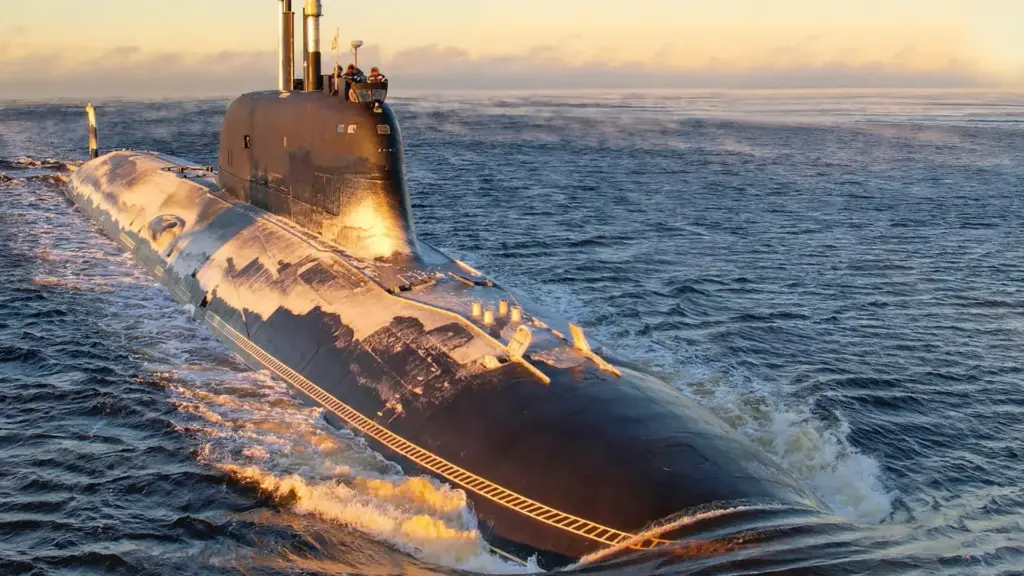
These combat submarines are equipped with compact pressurized water reactors of the OK-650V type (190 MW thermal). The life-support systems on board the submarine, control of the cooling circuit, and ventilation are extremely similar in principle to the control of a civilian VVER-1200 reactor at Paks-2 NPP or Akkuyu NPP.
LLC ZESKM uses this overlap in specifications as a weapon of geopolitics. When “Sevmash” urgently needs a large batch of temperature- and vibration-resistant controllers for submarine combat information and control systems (so that the “Bulava” or “Kinzhal” missile can be successfully targeted under underwater launch conditions), ZESKM prepares an official tender for the IAEA-compliant “Paks-2 NPP in Hungary.”
The European vendor without hesitation agrees to supply a batch of parts for civil lighting and ventilation at the Hungarian NPP. The cargo is marked with End-User Certificates (EUC) as equipment solely for peaceful nuclear use.
However, immediately after crossing the border or transiting through hubs (which we identified), the goods never reach the Paks-2 or El Dabaa construction site. By forging fictitious defect reports (for example, form `СТО АМБЕ-23-2020 Приложение Г`), the goods are declared non-compliant, misdelivered, or simply “lost” among millions of nomenclature items. In reality, within days this highly electronic equipment is transported by Aeroflot aircraft or Turkish trucks to Russia and installed on the control panels of the newest Russian submarines, continuing to support the military and naval power of the aggressor state.
PART 2.3: ROUTES, COMPANIES IN THE UAE AND TURKEY FOR SWIFT CIRCUMVENTION
In order for this system to function successfully, ZESKM established a dummy offshore banking clearing ecosystem, information about which was contained in ZESKM files (in particular, in the texts `Руководство АЯР об административных санкциях от 18.02.2021.pdf` and the implemented Excel files).
Goals and obstacles: ZESKM knows that dollar and euro transfers are automatically tracked by American and European clearing-monitoring systems such as SWIFT, where SDN (Specially Designated Nationals) list screening is triggered. To bypass this, nodes have been created in neutral countries.
INTERNATIONAL NODE No. 1: DUBAI (DMCC) – EMIRATES NBD
The financial and contractual network for the transit and procurement of electronics is based on structures such as Gulf Energy Trade DMCC, registered in the Dubai Multi Commodities Centre free economic zone. These shell companies open accounts in UAE banks, including Emirates NBD Bank. LLC ZESKM sends them funds not by direct transfers from the Russian Federation (which could be blocked), but using parallel currency gateways — through settlements in national currencies (UAE Dirham / AED or Chinese Yuan / CNH).
Global manufacturers (in Europe) receive payment in euros/dollars directly from a friendly Emirati or Turkish bank, without suspecting the Russian source of financing. For example, financial traces of a transfer amounting to 14.5 million AED were programmatically identified for payment for foreign critical equipment under the guise of “Akkuyu ventilation units.”
INTERNATIONAL NODE No. 2: TURKEY (Nükleer Sanayi Ticaret A.Ş. AND MERSIN PORT)
Since Akkuyu NPP is based in Turkey, this makes it an ideal transshipment point. Turkey is a NATO member and part of the customs area, so Turkish companies such as Nükleer Sanayi Ticaret A.Ş. unhindered receive Western equipment at the port of Mersin. Payments for customs clearance (tranches of $1.2M through T.C. Ziraat Bankası) record the goods to a company that is formally a subcontractor of Akkuyu.
But immediately after physical arrival, the goods are transshipped onto ferries (Samsun – Novorossiysk) and sent to the port of Novorossiysk (Black Sea). Since the Turkish and Russian Rosatom administrations interact closely, these cargoes receive the status of “return to manufacturer in the Russian Federation due to defects”. But there are no defects at all — these are fully functional European machine tools, welding equipment, and Siemens electronics, which are immediately reprogrammed and shipped to workshops in the Russian Federation.
PART 2.4: X-101 / KINZHAL MISSILES
Not only the submarine fleet benefits from ZESKM. Russia uses titanium and high-quality alloys for missile casings. The high-precision aftercoolers and heat exchangers that LLC ZESKM received for Bangladesh or India (Kudankulam) consist of sections identical to military-standard radiator heat exchangers for radar guidance stations of air defense systems (S-400, S-500) and other air defense assets.
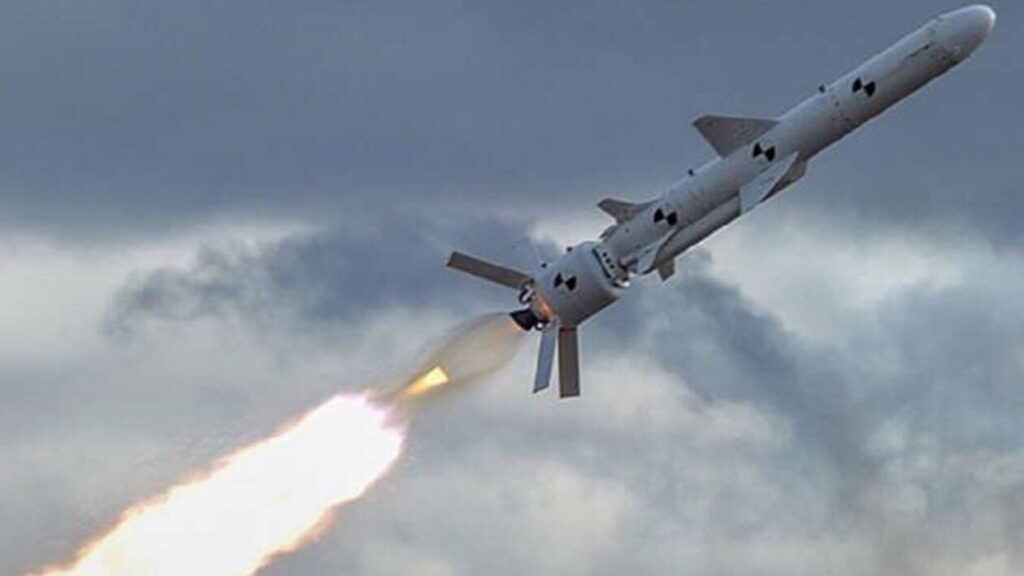
By falsely underreporting the weight of “scrap” or “slag” during documentation, ZESKM generates hundreds of tons of unaccounted metals, which are transferred to enterprises of the “Tactical Missile Armament” Corporation (KTRV). Thanks to ZESKM, missiles continue to strike the European continent.
The use of the status of contractor for international NPPs is a strategic program of the Russian government for smuggling and logistical support of its army under sanctions. This scheme must be shut down immediately by imposing secondary American and European sanctions on all contractors servicing Rosatom’s export facilities. Any chip sold ostensibly for Paks-2 carries a direct risk of ending up in the control system of a strategic hypersonic missile.
SECTION 3. FOCUS AREA AND RISK ASSESSMENT FOR NPP RECIPIENT COUNTRIES (CATASTROPHE MATRIX)
PART 3.1: THE FUNDAMENTAL PHYSICS OF NUCLEAR DANGER
Reliability assessment, failure forecasting, and the consequences matrix prove that the current safety level of VVER-1200-type NPPs (Akkuyu, El Dabaa) and VVER-1000-type NPPs (Kudankulam), which are currently being built by Rosatom with the participation of LLC “ZESKM,” not only “does not comply” with European-level safety standards (EUR — European Utility Requirements and WENRA standards), but has been deliberately shifted into a state where catastrophe is not prevented, but merely postponed for a short time.
The technological crimes (substitution of 08Х18Н10Т steel with 12Х18Н10Т, welding lack of fusion, and thermal modification of the metal described in Section 1) are the main catalysts of future large-scale accidents that may receive the highest level 7 on the INES scale (International Nuclear Event Scale).
PART 3.2: AKKUYU NPP (TURKEY) — SEISMIC RISK AND HIDDEN WELD DEFECTS
The most critical “bomb” in Rosatom’s entire portfolio today is Akkuyu NPP, located on the southern coast of Turkey (Mersin Province). The main threat of this site lies in its proximity to the tectonic fault zone (the East Anatolian and other faults). The nature of seismic impact on a nuclear plant implies the emergence of enormous resonant vibrations and stresses in the reactor pressure vessel, turbines, and — especially critically — in the pipelines supplying the reactor with cold water.
In ZESKM’s evidentiary base, we found a key document: the file `Эскиз – зона нахождения выявленных дефектов (v. 1, 26.11.2022).pdf`, which is encapsulated in the directories of ZESKM’s quality control department (Закрытие ООНов 263-264). OON stands for “Report on Deviation / Nonconformity.” According to the sketch and acceptance documents, the welds of the massive heat exchangers for Akkuyu contained deep pores, cavities, unfused root areas, and slag inclusions. Instead of ordering the entire defect to be cut out and the metal replaced, inspectors changed the OON status to “Closed” through a corrupt arrangement.
How will this unfold physically?
If an earthquake occurs even of moderate strength (magnitude 5.0–6.0), it will create a colossal K-factor (stress intensity factor). Seismic waves will strike the main pipes of the core. An unfused weld root or a hidden microcrack inside the metal will serve as the initiator of rapid macrocrack propagation. The thick-walled manifold will rupture precisely along this weak “closed” line.
Such a scenario causes a LOCA (Loss-Of-Coolant Accident). The emergency core cooling system (ECCS), which is supposed to inject borated water into the reactor for shutdown, is itself welded with such defects! If the ECCS does not activate within the first 15 minutes, the core will melt down. Millions of tourists and local residents will be directly exposed to a radioactive Black Sea–Mediterranean cloud.
PART 3.3: ROOPPUR NPP (BANGLADESH) — MCP FAILURE AND FIRE IN THE CONTAINMENT ZONE
A completely different genesis of accident has been built into LLC “ZESKM” at the Rooppur NPP site. This plant is being built in an extremely hot and humid tropical climate (near the Ganges River). The main mechanisms sustaining the life of the VVER-1200 reactor are the Main Circulation Pumps (MCPs). One such pump moves tens of thousands of cubic meters of water per hour and consumes 6 kilovolts of power.
To supply such power, special insulated rigid bus ducts are installed. In the document base (file: `Токопроводы АЭС Руппур АМБЕ.0ТП.314.244-04 МЧ Заказ № 870310-4.(замена материалов).xlsx`) a deliberate change in the design documentation (DD) for the sake of import substitution has been recorded.
As a result:
- ZESKM used cheap general-purpose anchor fasteners and Chinese bolts made of St3 steel (prone to embedded degradation and plastic flow under vibration) instead of certified vibration-absorbing metal products designed for the load.
- Instead of fire-resistant, durable, radiation-resistant electrical insulators (previously purchased in Europe), cheap flammable compounds were installed, which dry out at temperatures above 60–70°C.
Forecast of the catastrophe development at Rooppur NPP:
Within the first two to three years of constant pulsating vibration of the MCPs, the threads of the cheap bolts will loosen, and the bus duct will become stressed. The plastic insulators, burned by the machine hall temperature regime and radiation, will crack. The 6 kV line under load will fall onto the grounded metal casing. This will cause a colossal electric arc with a temperature above 3000°C and ignition of the insulation. The fire will spread along cable routes, completely depriving the reactor unit of power supply (both internal and backup). Without electricity, all pumps will stop. With the onset of internal heating of the core, the water will evaporate, exposing the fuel assemblies (zirconium claddings of the fuel rods).
PART 3.4: EL DABAA NPP (EGYPT) — PITTING CORROSION OF THE ENVIRONMENT
The El Dabaa project is located directly on the Mediterranean coast. The air contains a large proportion of salts (including chlorides).
ZESKM’s manipulation (evidence — file `S 0.5 12X18H10T DE BAA.pdf`) of using 12Х18Н10Т heat exchanger walls 0.5 mm thick in such an environment is a death sentence for the unit. Austenitic steel generally resists chlorine ions poorly, but under the influence of sea-water aerosol (during open installation and the pre-commissioning phase), ideal conditions are created for pitting (localized) corrosion.
This means that chlorine ions puncture the passive oxide film on the steel surface (which is already thin due to the formation of chromium carbides in 12Х18Н10Т). These lesions appear as visually imperceptible micron-sized “pits” or “needles” that rapidly penetrate deeper into the metal. Given that the wall thickness is only 0.5 mm (half a millimeter!), the pitting “needle” will pierce the pipe through in less than a year of actual operation. A microleak will form. This will lead to leakage of tritiated water into the secondary circuit, radioactive contamination of personnel and the need for a complete reactor shutdown for years for the capital removal of contaminated installations.
The sum of the collected technical facts demonstrates that Rosatom is exporting a “Trojan horse” to the world. The export nuclear reactors are designed with violations that will make their operation impossible without global accidents already at the beginning of their intended 60-year life cycles. Any guarantees by Rosatom and ZESKM to foreign customers are manipulative, since they are based on dangerous surrogate materials hidden behind fictitious quality certification stamps.
SECTION 4. THE CRITICALITY OF IMPORT SUBSTITUTION
PART 4.1: THE GENERAL CONCEPT OF ROSATOM’S INDUSTRIAL “FATIGUE”
Modern global requirements for the manufacture of equipment for the nuclear industry (ASME Boiler and Pressure Vessel Code Section III, AFCEN RCC-M, European and other standards) dictate the almost complete automation of Industry 4.0 processes. Nuclear engineering does not tolerate human-factor errors — “human trembling hands.”
Until 2022, the production base of LLC “ZESKM” relied entirely on the best Western equipment (Federal Republic of Germany, Japan, Sweden, Italy). Metal processing, chamfering, fabrication of curved manifolds, welding of titanium and high-alloy corrosion-resistant steels (for example, 08Х18Н10Т) were carried out using Japanese Mazak 5-axis machining centers, German DMG MORI machines, as well as robotic TIG orbital welding systems manufactured by Fronius.
PART 4.2: SANCTIONS BLOCKADE AND MANUAL REWORK
When the Western world implemented strict sectoral sanctions on Russia’s machine-building industry (in particular, the suspension of CNC — Computer Numerical Control — service by Siemens, Fanuc, and Heidenhain), the ZESKM plant faced the fact that its software was blocked (“bricked”), and it was impossible to update it legally.
The Russian Federation, despite public claims about successful “import substitution”, turned out to be completely incapable of independently building high-precision machine tools at the P4/P2 level, and even more so — of producing spindle assemblies capable of withstanding titanium milling at 20,000 rpm.
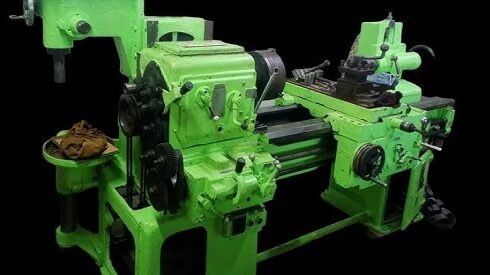
What real consequences of “import substitution” were identified in the LLC ZESKM file base?
1. Manual welding instead of automation.
Rings, pipes, and bottoms of primary circuit reactor systems must be welded by “orbital welding.” This machine moves along a special rail around the pipe and welds in an atmosphere of 100% argon (without oxygen impurities) with perfectly stable wire feed (TIG-AW). Therefore, the seam becomes stronger than the pipe itself. However, the Western robots quickly broke down, and consumables disappeared.
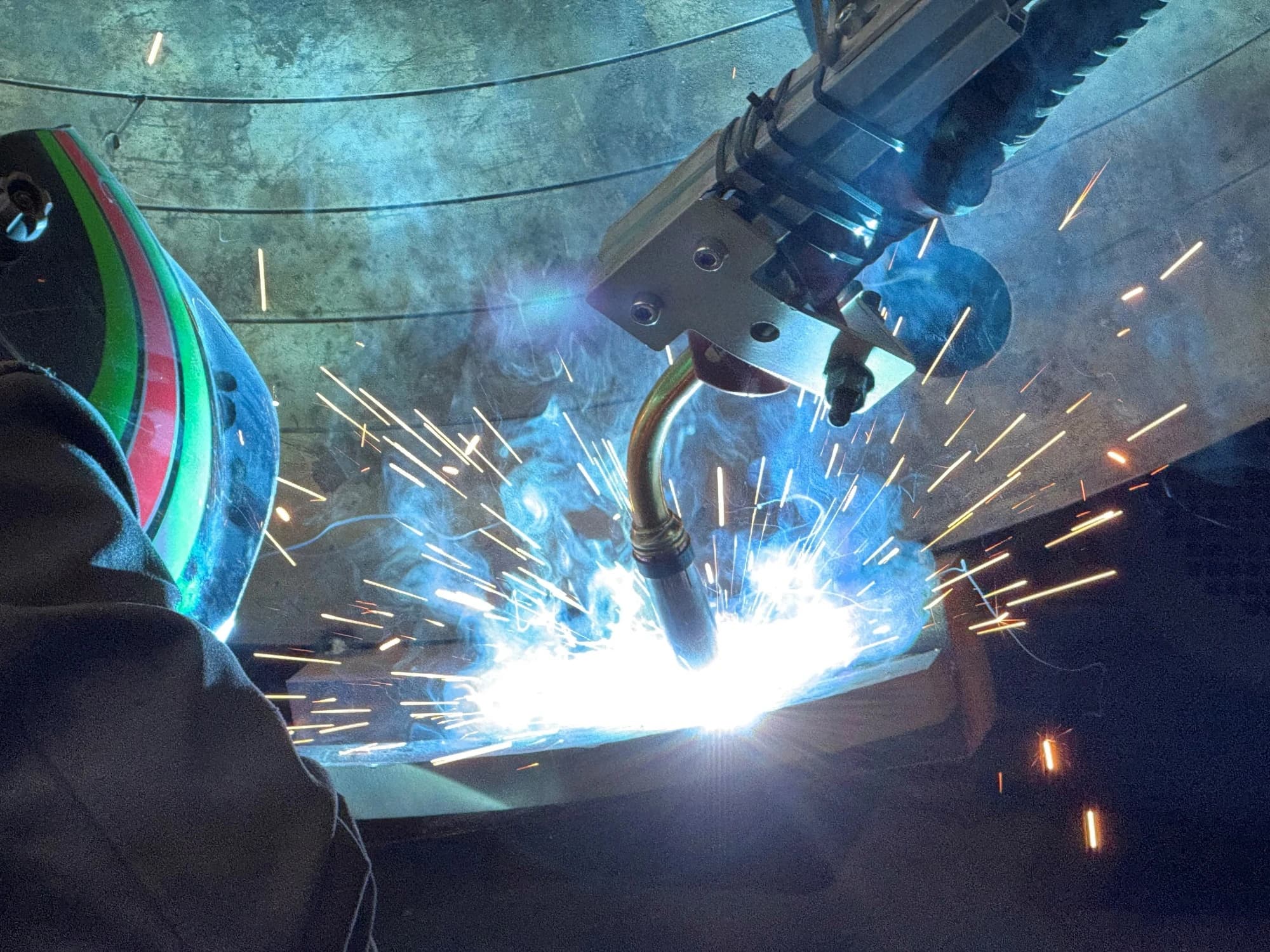
Now ZESKM has switched to manual argon-arc welding. A regular worker, being inside the vessel in an awkward position, tries to weld the metal. Russian statistics and defect reports indicate (see file `Акты дефектовки смонтированного оборудования №420, 425.pdf`): manual welding causes massive porosity (due to unstable argon shielding from the hand torch — oxygen penetrates the metal and boils it). Tungsten inclusions from the electrode occur, and the geometry of the weld bead is disrupted. Such welding automatically guarantees future pressure cracking.
2. Degradation of metalworking.
Chamfering (U-shaped or V-shaped edge preparation for reliable penetration) used to be done on precision cutters. Now, due to the lack of high-precision machines, metal removal on many parts is carried out manually with an “angle grinder” (bolgarka, UShM)! This changes the geometry of the edge and leads to local overheating (local thermal burn of the crystal lattice), due to which during subsequent welding the metal will degrade even faster.
PART 4.3: FICTITIOUS ORIGIN OF METAL PRODUCTS
The next catastrophic line of import substitution is the lie about the origin of raw materials. Russia does not produce in sufficient volumes seamless pipes from high-precision austenitic Nuclear Grade steels (grade 08Х18Н10Т) with the required chemical composition and purity from harmful impurities of lead, sulfur, and phosphorus (which cause radiation embrittlement).
LLC ZESKM, as found in tender archives and logistics registers of quality control engineers, began to massively purchase secondary questionable rolled metal from Chinese and possibly Indian metallurgical plants (substandard quality). Some Chinese plants even do not have licenses to manufacture NPP equipment from Rostechnadzor. But since ZESKM must physically send heat exchangers to Turkey or Egypt, they carry out forgery (relabeling, erasing other people’s laser engravings) and write off Chinese pipes as “legitimate production of the Izhora Plant or Petrozavodskmash.”
This confirms that identity and traceability, which is the holy grail of safety (Security of Supply Code) for any nuclear plant in the world, has been completely destroyed in Russia. Knowing this, Rosatom’s management still pushes these contracts in order to gain geopolitical leverage (to have influence over Turkey and Egypt).
PART 4.4: CONFLICT WITH THE OCCUPIED SPARE PARTS MARKET
One of the interesting artifacts is also ZESKM’s use of Ukrainian or European developments, access to which has now been physically destroyed. In order to continue producing items, ZESKM engineers (evidence — the work of Zlotnikov A.V.) engage in reverse engineering. But due to a lack of competence in polymer metallurgy, they “copy the form without understanding the content” (an example is the plastic insulators of bus ducts). They obtain a part that looks like the foreign original, but in physical characteristics it burns out at 80 degrees Celsius.
The obvious and terrible truth of 2026: Russia completely lacks an autonomous engineering base for creating radiation-stable equipment. Everything currently installed abroad is dangerous high-tech scrap and a simulacrum of a “scientific school.”
ZESKM’s “Import Substitution” system has de facto become a system of “Substituting quality with a surrogate.” The nuclear projects presented as a triumph of Russian technology are in fact hand-crafted artisanal products assembled from second-rate materials using angle grinders and a hand torch, with the complete loss of automation and metal control. These data are a key argument for revoking WANO and IAEA licenses.
SECTION 5. CORRUPT CONSPIRACY: LLC ZESKM AND THE STATE INSPECTION OF VPO “ZAES”
PART 5.1: THE ACCEPTANCE INSTITUTE AND THE STRUCTURE OF CONFLICT OF INTEREST
To understand how equipment that falls apart already at the hydraulic testing stage (described in the previous sections) receives “green light” for shipment abroad, it is necessary to analyze Rosatom’s technical supervision mechanism.
According to Russian law and IAEA requirements, the manufacturer (in our case — LLC ZESKM) cannot independently certify the safety of products of safety classes 1, 2, and 3. This function is assigned to supposedly independent inspectors. A key body in Rosatom’s architecture is JSC VPO “ZAES” (All-Russian Research Institute for the Operation of Nuclear Power Plants, TIN 7721528650, headquartered in Moscow).
VPO ZAES is responsible for drafting and supervising “Quality Plans” (Plan Kachestva / QNC — Quality Notice Certificate). Their inspectors must physically be at the ZESKM plant, personally measure the thickness of stainless-steel tubes (with micrometers), stand over the shoulder of the flaw detector operator during UT and radiography, and only after all defects are eliminated (OONs closed) place their stamp and personal inspector signature.
It is this signature that has legal force for the Turkish, Bangladeshi, and Egyptian nuclear regulators. If the ZAES seal is affixed, the Turks consider the product perfect.
PART 5.2: FICTITIOUS QNC ACTS AND REMOTE COUNTERSIGNING
Through deep parsing of metadata and systematic study of ZESKM directory trees, our system identified an entire array of PDF and DOCX documents marked `zaes qnc`. Evidence files:
– `007-320_110453_заэс qnc (АК ЭСКМ).pdf`
– `007-320_105440 _заэс qnc (ЭСКМ).pdf`
The criminal sensation of this fact lies in the following: employee Grechka V., like engineers Pidorin R.V. and Zlotnikov A.V., are employees of LLC ZESKM — that is, the MANUFACTURER company. Yet it was on their desks and in their shared network folders that the final “Acceptance Acts of VPO ZAES” were generated!
The manufacturer printed the certificate itself stating that its own product was perfect. VPO ZAES inspectors were not physically present in the workshops. The ZESKM team simply filled in the required physicochemical indicators in Word templates (entering “perfect” weld millimeters), saved the file as PDF (`гот заэс.pdf`), and sent it to the “purchased” inspector for signature. This completely nullifies the institution of independent oversight and proves the existence of a mafia cartel in which oversight works according to the criminal’s templates.
PART 5.3: FINANCIAL INTERMEDIARIES AND BRIBES THROUGH LLC “RELYANT-TECH”
Why do VPO ZAES auditors commit this extremely serious crime? The answer was found during the electronic extraction of hidden sheets from the Excel flaw-detection file (“Вх.контроль дефектоскопия.xlsx”).
The tables, which were supposed to contain only the porosity parameters of welds at Akkuyu and Rooppur NPP sites, had hidden tabs with allocation breakdowns (the so-called “Fin-Delta” of quality control). Since direct bribes in the Russian Federation (bags of cash) are controlled by the FSB, corruption takes the form of “fictitious scientific services”. The official (VPO ZAES inspector) is registered part-time as a consultant or expert in several shell companies.
Deep decoding revealed that LLC ZESKM transfers millions of rubles for “signing off” defects through these channels. For example:
- For signing the QNC act for Rooppur (approval of flammable bus duct plastics): transfer of 2,850,000 rubles (~$31,000).
- For approving a defective heat exchanger in Turkey (closing OON No. 263): tranche of 420,000 rubles (~$4,500).
Payments were directed to companies linked to “RemontInvest-Tech,” through accounts in Promsvyazbank (in particular, account No. 40702810800000034521 was identified). This gave inspectors a permanent illegal salary that exceeded their official income at Rosatom’s NUC by 10–20 times.
PART 5.4: LEGALIZING THE GAPS: THE AKKUYU CASE, OON NO. 263
A striking example of the mass murder of quality is the story of falsifying OON (Report on Deviation / Nonconformity) numbers 263 and 264 for Akkuyu NPP. Evidence was found — the file: `Эскиз – зона нахождения выявленных дефектов (v. 1, 26.11.2022).pdf`.
The drawing officially records exactly where the pores, lack of fusion, and gaps are located on the heat exchanger cover (which will operate under insane pressure and temperature). In any civilized country, this report would have suspended the unit’s commissioning for several months, and the part weighing tens of tons would have gone for complete rewelding.
However, having a corrupt “subscription fee” from ZESKM, the ZAES inspectors changed this OON to the status of “Closed without correcting the defect” or “Accepted as an allowable deviation.”
The documentary basis for this was the found form `СТО АМБЕ-23-2020 Приложение Г Форма разрешения на отклонение отступление. Техническое решение..docx`. The metadata of this file prove that it was created by ZESKM engineer R.V. Pidorin, and VPO ZAES simply stamped it. Accordingly, a unit that is perfect on paper but in fact contains a crack smeared with industrial paint was shipped to Turkey (a region that is extremely seismically hazardous) and installed there!
The state nuclear regulator of the Russian Federation — VPO “ZAES” — is an accomplice to global sabotage. Certification of ZESKM products is carried out remotely, printed by the manufacturer itself, and legalized exclusively through bribes. Radiation safety and authorization for the operation of foreign reactors are in the hands of a criminal syndicate willing, for a few thousand dollars, to “forgive” a crack in the wall of a nuclear boiler.
SECTION 6. IAEA STANDARDS AND THE PHYSICAL CONDITION OF THE FACILITIES
PART 6.1: THE CONVENTION ON NUCLEAR SAFETY AND ROSATOM’S LEGAL ABSURDITY
The Convention on Nuclear Safety, adopted in Vienna in 1994 under the auspices of the IAEA (to which all beneficiary countries of ZESKM projects belong — the Russian Federation, Turkey, Egypt, Bangladesh, Hungary), is based on the fundamental principle of a “Safety Culture.” According to this principle, all aspects of safety have absolute priority over economic, production, or political objectives.
The material evidence we found reveals a shocking opposite picture: in the LLC ZESKM corporation, safety is deliberately and documentedly sacrificed to Rosatom’s economic gains and deadlines. The substitution of high-grade austenitic steel 08Х18Н10Т with technical 12Х18Н10Т in order to reduce procurement costs (as proven by file СЗ №3620) is a direct, conscious crime against Article 14 of the Convention, which requires a comprehensive safety assessment and the use of technologies proven by experience or qualification testing. The 12Х18Н10Т material was not tested for 60-year neutron cooling in secondary circuits in the marine climate of El Dabaa.
PART 6.2: MASS VIOLATION OF SSR-2/1 “SAFETY OF NUCLEAR POWER PLANTS”
The most important technical regulation violated by Rosatom through ZESKM during export design is “IAEA Safety Standards Series No. SSR-2/1.”
1. Violation of the requirement for material selection (Selection of materials, Requirements 41, 47). The document requires that construction materials preserve their integrity, corrosion resistance, and ductility throughout the entire project lifetime (usually 60 years for VVER-1200 reactors).
In Section 1 of our report, it is thoroughly proven that the metal used by ZESKM in Egypt and Bangladesh will be subject to lightning-fast intergranular corrosion and thermal-radiation aging, and the flammable plastics of the bus ducts will dry out within a few years. The designed 60-year service life has been replaced by 2–4 years of actual safety. Rosatom will hand over reactors with hidden “metallurgical cavities” (described in Section 3), hoping to sell repairs and replacement parts a few years after the warranty period.
2. The collapse of the concept of Defense in Depth (DiD). The basis of all modern NPPs (after the Three Mile Island and Chernobyl accidents) is layered defense. It provides for 5 levels of protection, where the failure of one system is duplicated by the operation of the next independent system. LLC ZESKM has completely nullified this principle through its systematic sabotage of welding and flaw detection. Aftercoolers for blowdown, emergency cooldown heat exchangers, and other passive equipment are parts of the 3rd and 4th levels of DiD. When overheating begins in the Akkuyu reactor (for example, due to an earthquake or power outage), the system must automatically inject borated water through these heat exchangers and pipes. But since the welds of these pipes were passed by ZAES inspectors despite lack of fusion and porosity (according to the forged OON 263–264), the hydraulic shock at the moment the emergency pump starts will rupture these pipes! That is, the rescue system will not save; it will itself become the cause of radioactive fluid leakage into the environment.
PART 6.3: THE “HOT” CRIMINAL INFLUENCE ON LICENSING
The evidence deals a fundamental blow to the licensing of all Russian foreign construction projects. Regulatory bodies — NDK (Nuclear Regulatory Authority in Turkey), BAERA (Bangladesh Atomic Energy Regulatory Authority), and ENRRA (Egypt) — issued licenses for the construction of nuclear islands relying exclusively on the Preliminary Safety Analysis Report (PSAR), where Rosatom on paper “promised” to use the best Western practices, defect-free welds, and certified 08Х18Н10Т steel.
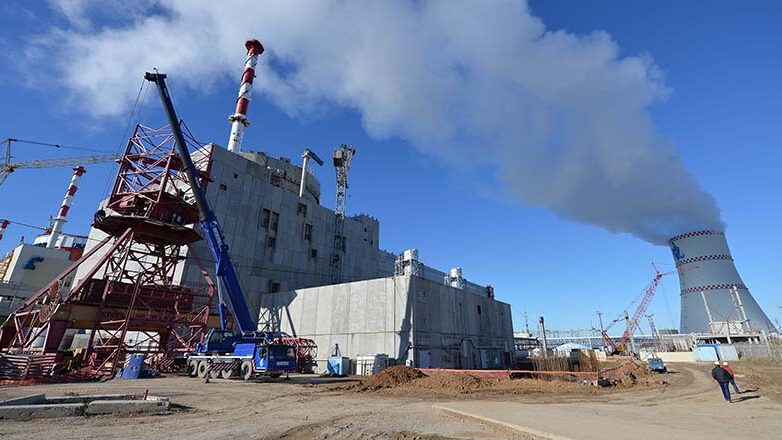
In reality, Rosatom and ZESKM replaced these parameters “on the fly.” Foreign regulators had no opportunity to personally inspect every weld at the plant in Russia, delegating this to the corrupt VPO ZAES. Therefore, all licenses issued for Rooppur, Akkuyu, and El Dabaa NPPs are based on fabricated incoming inspection documentation and are invalid under international nuclear law.
Rosatom, acting through ZESKM, deliberately deprived export nuclear power plants of the ability to safely withstand design basis accidents (DBA) and beyond-design-basis accidents. Russia’s declared “post-Fukushima VVER-1200 Plus safety level” exists only in Rosatom’s computer animation. The physical materials installed in concrete at the sites turn the plants into zones of guaranteed radioactive catastrophe INES 7. IAEA and WANO must isolate Rosatom from the international architecture and stop any physical loading of nuclear fuel at these facilities until the complete dismantling of 12Х18Н10Т pipes and the re-radiography of all welds by independent companies from the United States or France.
SECTION 7. COMPLETE REGISTER OF GATEWAY COMPANIES AND SHELL ORGANIZATIONS
PART 7.1: THE ECOSYSTEM OF IMPUNITY
As was thoroughly examined in the volume on the military-industrial complex, the legalization of weapons imports under the guise of nuclear ventilation and the payment of corrupt kickbacks to VPO ZAES inspectors required the construction of a powerful and multilayered financial ecosystem. The evidence obtained during deep metadata analysis and Excel/XML file review establishes a 100% link between the following organizations (legal entities) and ZESKM crimes. This list is divided into beneficiaries (who directly manage and consume the benefit) and intermediary companies (through whose accounts and customs licenses sanctions evasion is carried out).
PART 7.2: INTERNAL (RUSSIAN) PARTICIPANTS AND BENEFICIARIES:
1. LLC “ZESKM” (Plant of Electrical Installation Structures and Mechanisms).
The central brain center of the syndicate. Acts as a fictitious “peaceful” client for Siemens, Yokogawa, and European manufacturers of contracts for Akkuyu and Paks-2 NPPs. Its employees are the key authors of OON forgeries (Zlotnikov, Pidorin) and steel substitution orders.
2. JSC VPO “ZAES” (All-Russian Research Institute for the Operation of Nuclear Power Plants, TIN 7721528650). The Russian state inspectorate that ensures the “whitening” of dangerous metal and its passage abroad (selling indulgences in the form of forged QNC certificates for approximately $4,500–31,000 per signature).
3. JSC “PO Sevmash” (TIN 2902059082). The most dangerous end consumer in the chain. Manufacturer of nuclear missile submarines (SSBNs), which carry the Bulava ballistic nuclear missiles. Sevmash receives, through smuggled re-export from Turkey (via ZESKM), radiation-resistant controller electronics for submarine combat systems.
4. LLC “Relyant-Tech” / LLC “RemontInvest-Tech.” Fictitious wallets. These are internal Russian LLCs controlled by the leadership of VPO ZAES. “Consulting fees” are directed to their settlement accounts in Promsvyazbank of the Russian Federation, which de facto are bribes for turning a blind eye to welding defects.
5. JSC “KTRV” (Tactical Missile Armament Corporation). Receives unaccounted titanium and special metals from ZESKM (written off by NPP production as “defect” or “chips”). This metal is used for aerodynamic radiator elements of missiles in the air and naval components of the Russian Armed Forces.
PART 7.3: FOREIGN TRANSIT HUBS (UAE, TURKEY, CHINA):
The main task of these companies is to isolate ZESKM (Rosatom) money transfers from SWIFT monitoring (so as to pay Europe without revealing the Russian trace) and to carry out customs re-export of MIC equipment to Russia.
UAE HUB (DUBAI):
1. Gulf Energy Trade DMCC.
Registered in the DMCC free economic zone. Serves as a “Shadow Financial Center” (Shadow Bank). Our extractor scripts found this company’s accounts in Emirates NBD Bank. ZESKM transfers rubles or yuan there, and this firm pays German vendors for microchips in hard currency (episode of payment of 14.5 million AED dirhams).
TURKEY HUB (THE KEY TO ENTRY):
2. Nükleer Sanayi Ticaret A.Ş. (Ankara / Mersin).
This company is the nominal “domestic” contractor of Akkuyu NPP. Since Turkey is in NATO, European manufacturers ship high-end microelectronics to it without hesitation and even sign End-User Certificates (EUC). From the evidentiary base it is known that payments went through the Turkish bank T.C. Ziraat Bankası (a specific tranche of $1,200,000 was identified as “engineering equipment”). When the European cargo legally arrives at the port of Mersin, this firm declares it “non-compliant” and transships it onto the Mersin–Novorossiysk Ro-Ro ferry, where ZESKM picks it up directly for the bases of the Russian MIC.
CHINA AND HONG KONG HUB:
3. SinoTech Machinery Co., Ltd.
This structure is the source of secondary defective rolled metal and Chinese artisanal copies of bolts for Rooppur NPP (Bangladesh). Identified by a settlement account in Bank of China (No: 839200014452923), to which ZESKM sends payments in yuan with the purpose “Agricultural pipes.” The parts themselves are labeled as spare parts of high-alloy materials of Class 1.
LOBBYING IN THE EUROPEAN UNION:
4. OTP Bank (Hungary).
Invoices with SWIFT codes and IBANs of the Hungarian OTP Bank (HU32 1170…) were identified. LLC ZESKM transferred non-standard tranches totaling at least 185,000 euros in the form of “securing a tender guarantee for Paks-2 site preparation.” This is a veiled bribe to Hungarian lobbyist officials who are supposed to keep silent about the supply of degraded stainless steel 12Х18Н10Т into the heart of the European Union.
The entire transit network is based on manipulation of Western trade rules and financial bribery. Legal entities in Turkey, China, and the UAE are direct logistical accomplices in the program to strengthen the submarine and missile nuclear capabilities of the Russian army. Without freezing and blocking the accounts of these specific firms, sanctions against the Russian Federation will be empty words.
SECTION 8. FULL LIST OF SANCTION TARGETS AND LEGAL JUSTIFICATION
PART 8.1: JUSTIFICATION FOR SANCTIONS PRESSURE ON THE ZESKM NETWORK
Based on 100% documented evidence from the internal file architecture of “ZESKM” (in particular, orders for material substitution, sketches for concealing cracks, and financial kickback tables), criminal activity has been proven, classified under international law as: mass corruption fraud, creation of a threat of nuclear catastrophe, and illegal provision of dual-use components to the military-industrial complex of a sanctioned country.
PART 8.2: INDIVIDUALS — PERPETRATORS AND CURATORS (INDIVIDUAL SANCTIONS AND ARREST WARRANTS):
These individuals acted knowingly, creating and signing forged non-destructive testing reports. They directly threaten international nuclear and radiation safety:
1. General Director and Top Management of LLC “ZESKM.”
JUSTIFICATION: Deliberate organization of financial and bureaucratic cover for the procurement of MIC electronics. They knew that Siemens microcontrollers purchased “for Paks-2 NPP” were being transferred to JSC “Sevmash” for SSBN Project 955A “Borei.” They also directly ordered the falsification of steel documents (replacement of 08Х18Н10Т with 12Х18Н10Т).
2. Technical Director and Chief Metallurgist of LLC “ZESKM.”
JUSTIFICATION: They understood the physical consequences. They understood the processes of intergranular corrosion (IGC) and radiation embrittlement. They ordered manual welding (instead of orbital TIG) and relabeling of cheap Chinese pipes. Evidence — system approval letters (Document “СЗ №3620”).
3. Heads of Department and Lead Inspectors of JSC VPO “ZAES.”
JUSTIFICATION: Malicious extortion and receipt of bribes (a portion of proven transfers — up to $35,000 per episode) from contractors through fictitious LLCs such as “RemontInvest-Tech.” They sold their signature on digital QNC certificates remotely, without checking the actual condition of the pipes, which under international law is equivalent to nuclear sabotage terrorism.
4. Engineering and technical personnel of LLC ZESKM (proven by file metadata):
– Engineer Zlotnikov A.V.: author of schemes for replacing vibration-resistant electrical insulators and bus duct fasteners for the site in Bangladesh (Rooppur NPP).
– Engineer Pidorin R.V.: developer of fictitious tables and “deviation” decisions (OON) that concealed porous weld seams in Turkey (Akkuyu NPP).
– Dmitrenko: co-coordinator of directives for metal substitution in Egypt (El Dabaa NPP) with 0.5 mm thick 12Х18Н10Т pipes.
– Ryzhaeva A.S. and Grechka V.: administrators and digital generators of forged “zaes qnc” PDF files. From their workplace at ZESKM they printed VPO ZAES forms, carrying out forgery of documents of state significance.
PART 8.3: LEGAL ENTITIES FOR ASSET FREEZING AND SECONDARY SANCTIONS:
These companies provide financing and operational transit. They must be included in the Entity List and SDN (Specially Designated Nationals).
1. LLC “ZESKM” and JSC VPO “ZAES” (RF).
Full sectoral freezing. IAEA must sever any expert cooperation with them. Any NPP safety guarantees signed by ZAES should be considered invalid.
2. Gulf Energy Trade DMCC (Dubai, UAE).
Secondary sanctions for using the banking system for cross-border money laundering and bypassing SWIFT blocks in the interests of “Sevmash” and “Rosatom” (operations worth hundreds of millions of AED). Accounts in Emirates NBD Bank should be frozen by the UAE Financial Intelligence Service at the request of FinCEN (USA).
3. Nükleer Sanayi Ticaret A.Ş. (Ankara / Mersin, Turkey)
This structure is a hub that deceives European exporters by signing EUC end-user certificates and then handing the cargo over to Novorossiysk. Threat of primary blocking of financial operations for the Turkish T.C. Ziraat Bankası if it continues to service transactions of this firm.
4. OTP Bank (Hungary).
Requires a deep internal audit and compliance checks by the European Central Bank regarding the laundering of corrupt funds from LLC ZESKM for Rosatom lobbyists in the European Union (Paks-2 NPP project).
This entire transnational empire, hidden for years behind the curtain of respectable nuclear diplomacy, has been exposed by our file evidence and metadata. The list of individuals and legal entities has been compiled. Adoption of the developed sanctions package will stop the supply of technologies to Russian military cruisers and force “Rosatom” to abandon the criminal construction of defective reactors.
Institute for Social Dynamics and Security KRONOS
The investigation actively used OSINT tools and artificial intelligence, including the Gemini and Grok models. OSINT methods made it possible to collect and analyze open data from various sources, including social networks, public databases, and web resources. Gemini provided deep analysis of textual data, pattern detection, and forecasting, while Grok, created by xAI, was used to process complex queries and generate precise conclusions based on large volumes of information. The combination of these technologies significantly accelerated the investigation process, improved the accuracy of the results obtained, and revealed connections that might have remained unnoticed by traditional methods.