Anatolii Vovnyanko
Candidate of Technical Sciences, former Deputy Chief Designer of the O. K. Antonov ANTK for the An-124, An-225 aircraft, their modifications, and aerospace systems.
Ihor Akimov
Director of the KRONOS Institute of Social Dynamics and Security. Social engineer, defense systems researcher, OSINT analyst.
In their materials published almost a year ago, the authors demonstrated the need to use low-cost platforms such as trainer and combat trainer aircraft, as well as unmanned aerial vehicles, to destroy various enemy UAVs like “Shahed”, “Geran”, “Banderol”, etc., as well as to strike enemy ground and air forces (see “Thoughts on Technical Progress in Ukraine” — “Kryla” website, “Analysis of Ukraine’s Military-Technical Potential” — “Khvylia” website).
Throughout the millennial stages of human development, various approaches to creating and employing military equipment have been used — starting from stones, clubs, bows, and spears to modern high-tech platforms and UAVs. This directly applies to the full-scale war launched by Russia against Ukraine on February 24, 2022. While at the beginning of the invasion there was massive use of tanks, APCs, and manned aviation, at the present stage aircraft are used extremely sparingly and only over self-controlled territory, whereas UAVs and missiles of various types have become the main tools of modern warfare.
Countries like South Korea and Turkey had no aircraft manufacturing industry of their own at all, yet over the past two decades, they built it from scratch and established the production of both trainer and combat aircraft of generation 4+ as well as various classes of UAVs. At the same time in Ukraine, where the world-renowned “Antonov” Design Bureau operated, alongside two powerful series aviation plants and dozens of enterprises producing avionics, components, and engines, neither previous nor current authorities even raised the question of developing anything similar.
This article is addressed to the future leadership, in which we hope people with thorough technical and economic education, positive practical experience, and a strategic vision for Ukraine’s development based on economic feasibility will appear. After all, real defense capability is determined not only by the presence of advanced military aircraft, but also by their cost and the economics of production and maintenance. Let us take an example from the USSR era: in the Soviet Union, when creating military equipment, attention was paid exclusively to individual peak characteristics and the desire to “churn out” as many units of weaponry as possible. This strategy prevailed both before and after World War II. Military historians’ research convincingly proves that before the war, the USSR significantly outnumbered Nazi Germany in all types of armaments. After the collapse of the USSR, thousands of aircraft of various types and tens of thousands of tanks remained, exceeding the arsenals of all likely adversaries combined. A significant part of this colossal potential went to Ukraine, but over 30 years of independence, the domestic leadership mindlessly sold off and destroyed it.
Take, for example, the approach to creating MiG-23 fighters in the USSR and F-16s in the USA. The engine service life at the start of deliveries to troops for the Soviet MiG-23 was only 25 hours, later gradually increased to 50 hours, etc. This meant that a colossal amount of material and human resources was spent on producing new engines and constantly replacing them in operational units. In the USA, military officials and politicians realized in time that strategic advantage is formed not only by technical indicators, but also by life-cycle economics. Therefore, for the F-16 aircraft, an airframe lifespan of 4,000 flight hours was set from the very beginning, and the resource of the first versions of F100-PW-200 engines was 900–1,800 sorties with subsequent increase to 4,000–5,000 sorties. The point is that active warfare lasts for a limited period, whereas during peacetime, colossal funds are spent precisely on maintaining equipment readiness. This became one of the decisive factors why the USSR economically lost the Cold War to the USA and its allies!
The current leadership of Ukraine throughout the war has constantly begged for or purchased on credit ultra-expensive Western F-16, Rafale, and Saab JAS 39 Gripen fighters, presenting this to society as almost the sole panacea for our future victory. Furthermore, proper training of flight personnel for these complex systems requires years so that pilots can make full use of their built-in potential. This is similar to a modern flagship iPhone: it can be used merely for ordinary phone calls, or one can utilize the full spectrum of its advanced features, including artificial intelligence capabilities.
Modern high-intensity warfare has finally dispelled illusions about the decisive role of rare, individual, and ultra-expensive weapon systems. Over the past two years, Ukrainian society and military-political leadership have been trapped in the forced myth that purchasing tens of billions of dollars worth of, or receiving several dozen Western multirole 4th or 4+ generation fighters—such as French Rafales or Swedish Saab JAS 39 Gripens—is capable of fundamentally turning the tide of confrontation in the air. However, a sober engineering and military-economic analysis proves the opposite: striving to obtain a limited number of elite aircraft costing around $80 million per unit (and together with weaponry, spare parts, and infrastructure maintenance, this amount effectively doubles) is a strategic trap that drains colossal budget resources without achieving strategic superiority over the enemy.
As a result, we observe a paradoxical and critically dangerous situation: ultra-expensive Western fighters worth hundreds of millions of dollars are actually used like a modern iPhone solely for simple phone calls, rather than at the full power of their built-in potential. Due to the critical scarcity of their numbers and the colossal financial and reputational cost of every loss, the command is forced to operate them with extreme caution only deep in the rear to intercept cruise missiles and drones. These few aircraft cannot approach the frontline directly or operate over enemy territory, as they would likely be rapidly destroyed under the sights of a dense, layered enemy air defense system and long-range fighters.
Under conditions where the enemy possesses an extensive satellite reconnaissance network, “Iskander-M” ballistic missiles, “Kinzhal” hypersonic systems, and long-range kamikaze drones, any stationary airbase housing these few ultra-expensive fighters remains constantly targeted. The loss of just two or three such aircraft on the ground or in the air turns into an irreparable operational and financial disaster that paralyzes further employment of the entire aviation component through fear of new losses.
In this article, we want to briefly present our vision for the development of the aerial component of the Armed Forces of Ukraine for professional discussion, taking into account time, production, and economic realities.
As we wrote earlier, the primary task is the creation of a domestic combat trainer aircraft. Ukraine has long developed, certified, and successfully tested a line of highly efficient AI-222-25, AI-222-25F, and AI-322F aircraft engines (the latter with an afterburner).
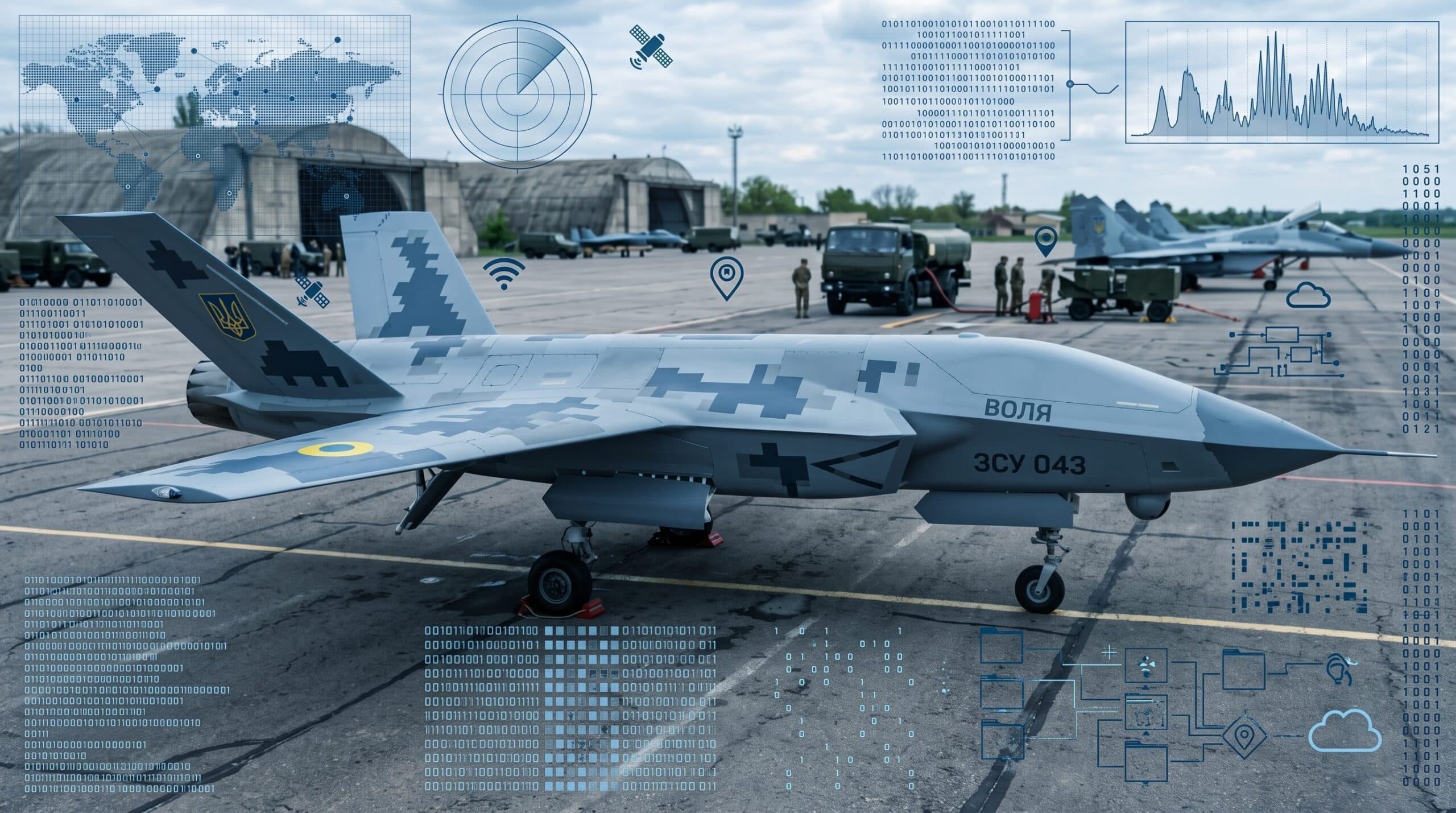
Based on these engines, we propose creating a unified platform in Ukraine equipped with two AI-322F engines, which will have three basic modifications: 1) a two-seat combat trainer aircraft; 2) a single-seat combat aircraft; 3) a combat drone. The takeoff weight of the platform will be about 10–11 tons with a payload capacity of up to 3 tons. The production cost of such an aircraft in Ukraine will be approximately $10–15 million depending on the modification. The aircraft will be adapted for operation both from concrete airfield runways and prepared sections of highways. It is necessary to jointly determine the optimal speed profile with military analysts—transonic or fully supersonic. During design, we must incorporate all relevant combat employment capabilities: intercepting and destroying enemy cruise missiles and UAVs, dropping guided aerial bombs (KABs), launching air-to-air and air-to-ground missiles, and working jointly in a single network with escort drones.
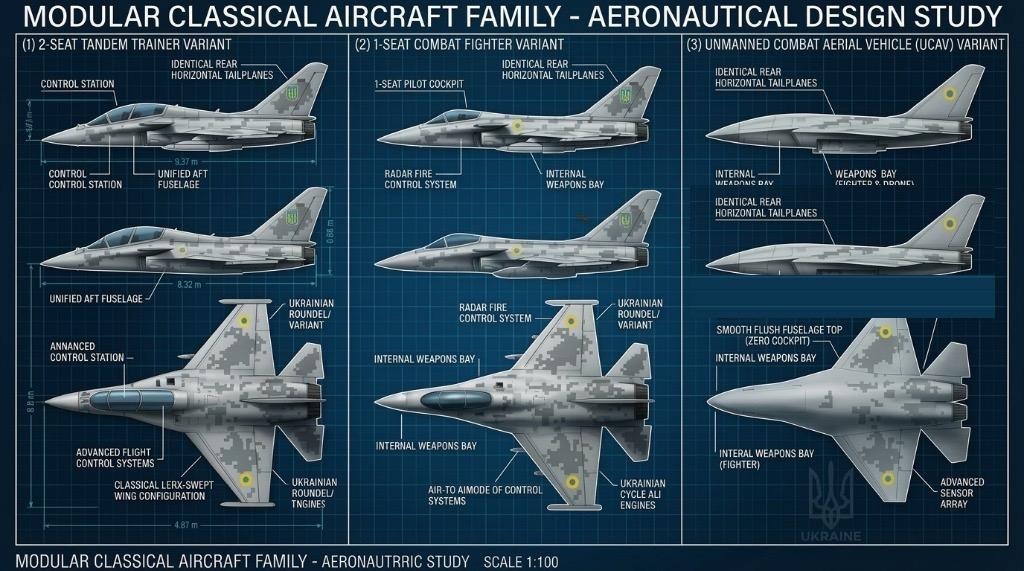
Figure 1. Conceptual comparison of three variants of a single unified platform: 1 – two-seat combat trainer aircraft; 2 – single-seat combat fighter; 3 – combat unmanned aerial vehicle (UCAV).
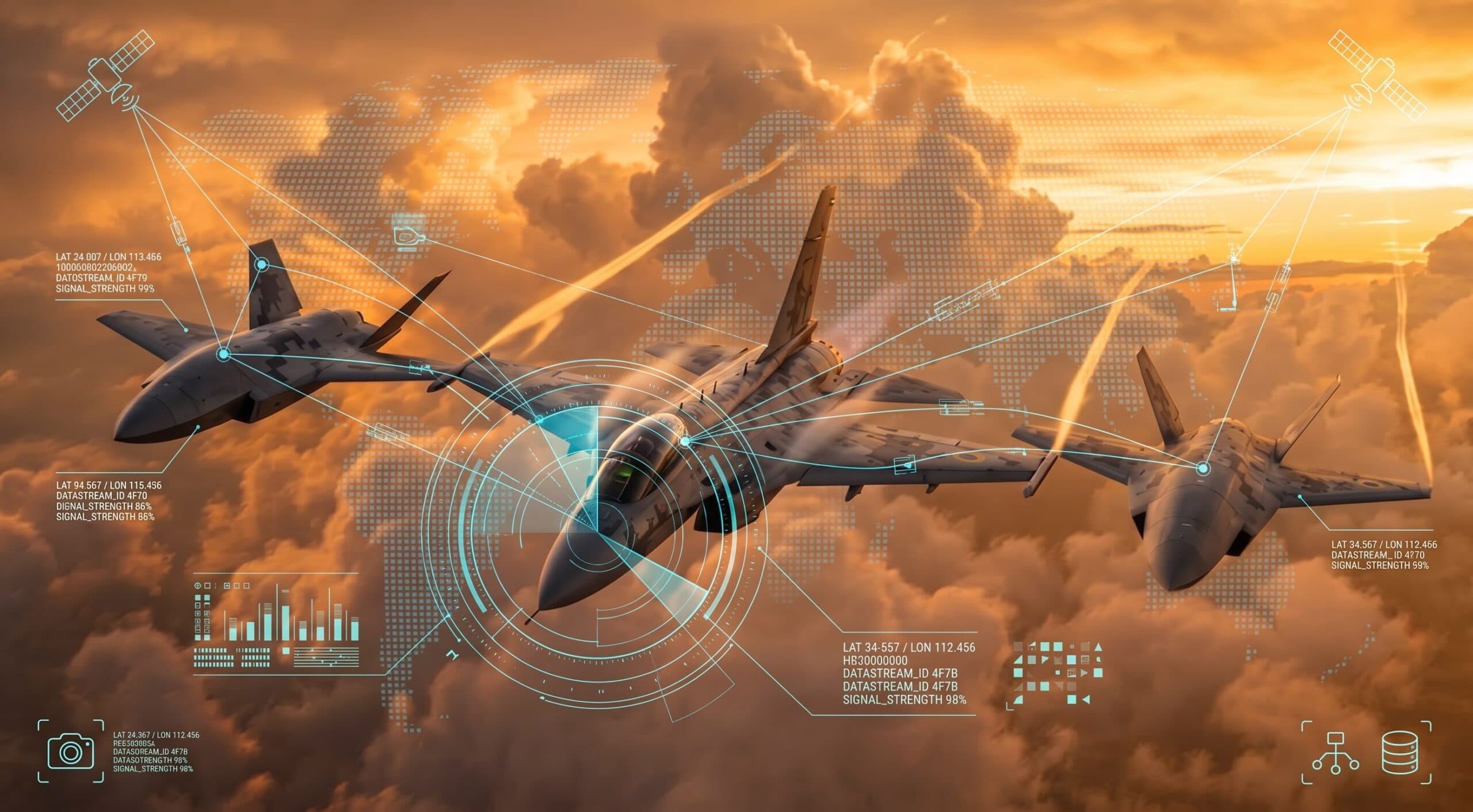
Also, as we wrote earlier, a fundamentally new class of weapons is currently being actively developed and implemented abroad—so-called escort unmanned aerial vehicles (“Loyal Wingman” / Collaborative Combat Aircraft — CCA), which operate in a unified information and combat network alongside manned aircraft and perform a whole range of critical functions:
1. Forward reconnaissance and sensor field extension (Forward Sensor / Scout) — flying dozens of kilometers ahead of the manned flight element to detect enemy radars, air defense systems, and enemy fighters in advance using onboard electro-optical stations and AESA radars without exposing the primary aircraft;
2. Suppression and destruction of enemy air defenses (SEAD/DEAD) and electronic warfare (EW) — projecting directional electronic jamming, disrupting enemy air defense systems, and acting as decoys that draw surface-to-air missile fire onto themselves, saving manned aircraft;
3. Remote weapon carrier / “flying magazine” — carrying and launching long-range air-to-air missiles, guided bombs (KABs), and cruise missiles target-designated by the lead manned aircraft, which multiplies the total ammunition load of the strike group;
4. Direct protection and interception of aerial threats — physically protecting the lead aircraft, destroying enemy tactical aviation in short- and long-range air combat, and providing highly effective mass interception of cruise missiles and strike drones;
5. Resilient communication relaying and network-centric interaction — creating a secure tactical Mesh network with swarm intelligence elements for continuous data exchange among aircraft, drones, ground control stations, and satellite terminals under heavy enemy EW conditions.
As examples, consider experimental and cutting-edge foreign developments: the American Kratos XQ-58 Valkyrie, the Australian-American Boeing MQ-28 Ghost Bat, and the Turkish Baykar Kizilelma.
Such an aircraft must also be developed in Ukraine. To reduce its cost, it will be subsonic and built around a single AI-322F engine. Together with the lead manned aircraft, such vehicles will significantly expand the capabilities of the Ukrainian Air Force in detecting and destroying both air and ground targets of the enemy.
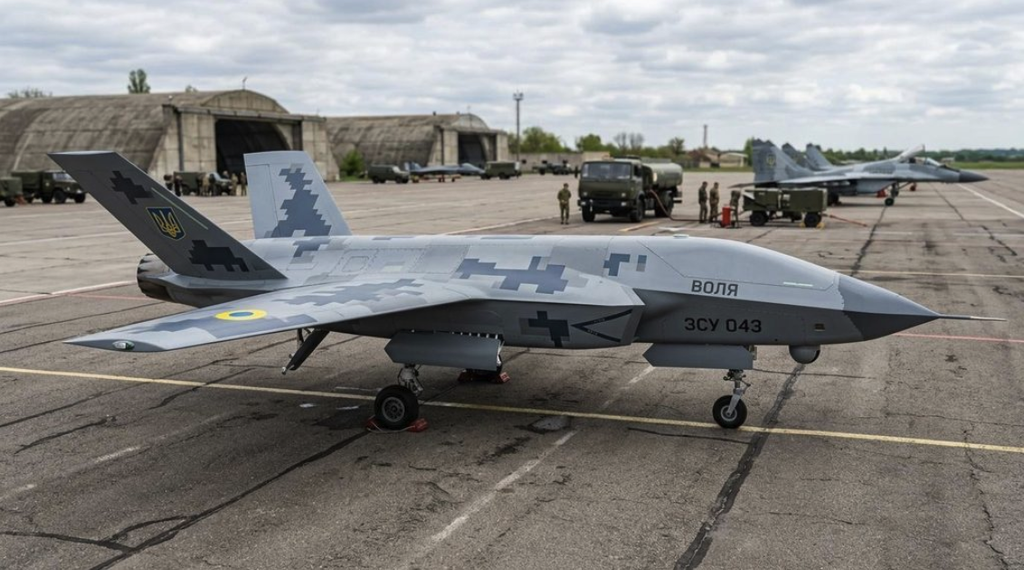
Figure 2. Promising Ukrainian combat escort UCAV (“loyal wingman”) based on the AI-322F engine.
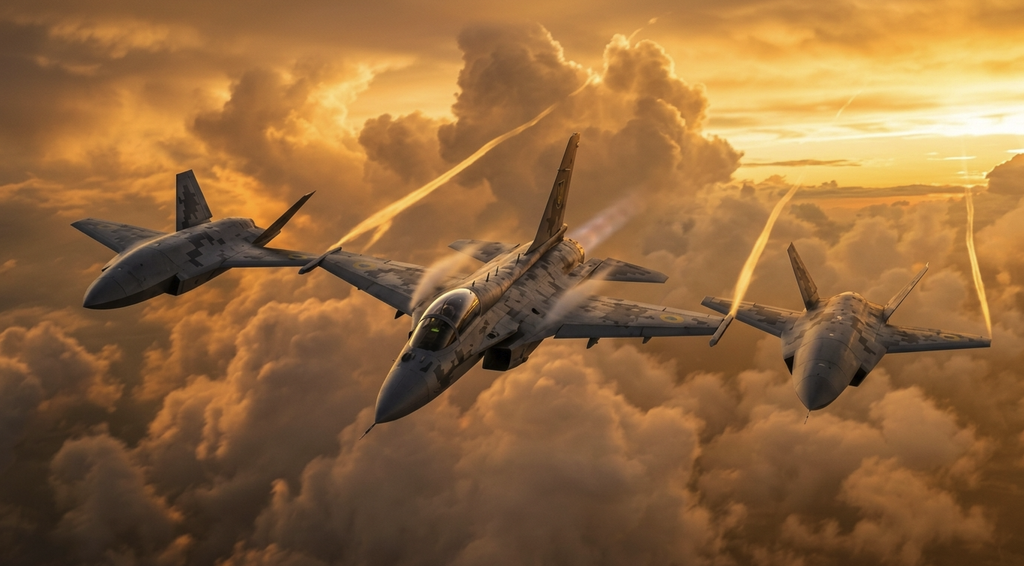
Figure 3. Combat employment in a mixed flight formation: a single-seat lead combat aircraft escorted by two autonomous UCAVs in the skies of Ukraine.
It is worth emphasizing that the authors of this concept emphasized the need to create precisely such affordable, mass-producible, and modular platforms in open publications more than a year ago. At the end of September, from our colleague Yurii Nazarenko, we received detailed analytical materials regarding the deployment in the USA of the official Massed Modular Aircraft (MMA) program under the auspices of the Pentagon. Leading American military analysts and engineers reached identical conclusions: classical rare, expensive platforms have exhausted themselves in modern high-intensity warfare, and victory is achieved by saturating airspace with mass modular drones and escort vehicles. These latest American data serve as direct and strong confirmation of the correctness, foresight, and technical soundness of our proposed Ukrainian program.
A fundamental mistake of many modern defense projects is absolute reliance on foreign supply chains and external export licenses. The experience of the war showed that any shift in political climate among partner nations or the introduction of ITAR regulatory restrictions can instantly halt serial production of critical weaponry. That is why the Ukrainian modular aircraft project must rely from the first draft on maximum utilization of domestic raw materials and localized technology processing.
Ukraine possesses unique global reserves of strategic ores and rare-earth elements, which until now were mostly used as cheap raw exports instead of producing high-tech products with high added value. Domestic titanium deposits in the Zhytomyr and Dnipropetrovsk regions make it possible to fully meet the demand for high-strength titanium alloys for structural airframe elements, wing attachment nodes, landing gear parts, and hot sections of jet engines. Confirmed reserves of zirconium, scandium, gallium, germanium, beryllium, and lithium provide a direct opportunity to establish a full closed-loop production cycle in Ukraine for thermal barrier coatings, specialized alloyed aluminum-scandium alloys, radar-absorbing composite materials for low observability, high-efficiency electric motors, and domestic battery systems with high energy density.
Minimizing dependence on imported components must also extend to critical microelectronics and control systems. By implementing open computing architecture modules and employing domestic sensors, optical- and laser-type inertial navigation systems with corrections via optical flow and terrain contour matching, we rule out remote jamming or blocking of satellite communication channels by enemy EW assets. The Ukrainian aircraft must be a 100% sovereign product capable of uninterrupted production even in the event of a total global supply crisis of semiconductors or metals.
Further delay and waiting for external charity in the form of deliveries of a limited number of foreign manned fighters is a direct path to losing national strategic parity. Ukraine must act decisively, relying on its own scientific and engineering school, industrial base, and material resources to build affordable, next-generation modular combat aviation.