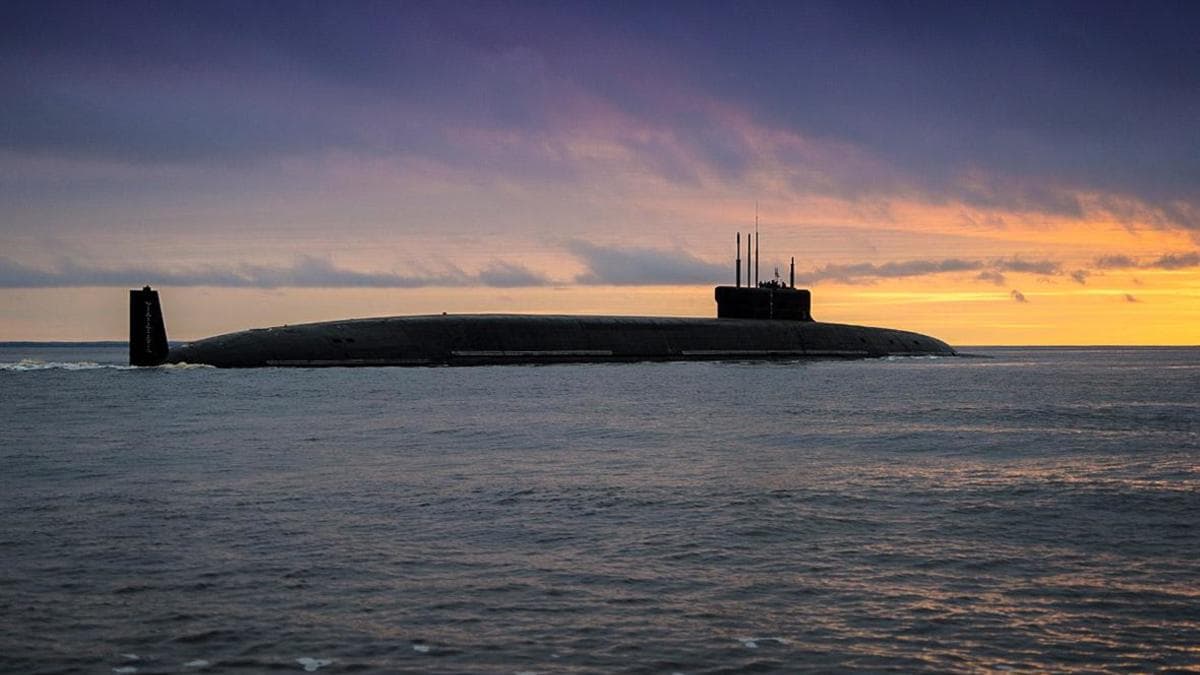
*CYBINT (Cyber Intelligence) — operations or research based on cyber intelligence. They involve the collection, analysis, and use of information obtained from cyberspace to achieve strategic, operational, or tactical objectives.
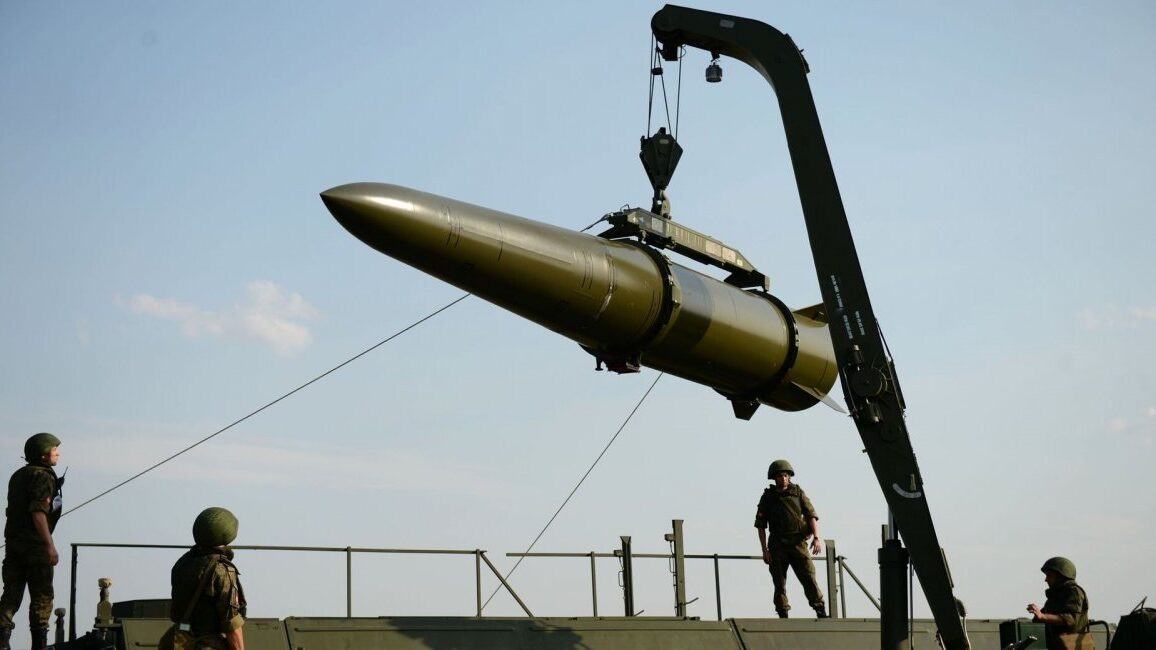
Outwardly, this is an ordinary street in an industrial-residential district of Saint Petersburg. Rybatskoye metro station, the daily flow of people, traffic jams, routine. At 36 Teplovoznaya Street, there are no high fences with barbed wire, no towers with armed guards, and no signs reading “Ministry of Defense of the Russian Federation.” It looks like a typical commercial site where an auto repair shop or a household appliances warehouse could be located. But it is precisely here, alongside hundreds of thousands of civilians, that high-precision European computer numerical control (CNC) machines operate. They machine nozzles for Iskander-M ballistic missiles (code 9M723) — the very weapons that, within a few weeks, will strike residential districts of Kharkiv, Kyiv, or Odesa.
This investigation examines how the Russian Federation adapted its military-industrial complex (MIC) to the conditions of severe international sanctions. Analysts from the “KRONOS dynamics” project, relying on massive leaks of classified financial documentation, State Defense Order (SDO) contracts, and internal correspondence of Russian enterprises, were able to trace and deconstruct every stage of this lethal chain.
We do not merely state facts — we identify specific targets for kinetic destruction and sanctions-based suppression.
“Iskander-M”: A Civilian Fleet Builds Ballistic Missiles
The Iskander-M operational-tactical missile system is one of the most complex and dangerous weapons in the enemy’s arsenal. The 9M723 ballistic missile flies along a quasi-ballistic trajectory, actively maneuvering, which makes interception an extremely difficult task even for advanced Patriot or SAMP/T systems. But for this missile to launch, thousands of components are required. And if the guidance electronics are produced by the elite Design Bureau of Mechanical Engineering (JSC “NPK KBM” in Kolomna), and final assembly is carried out by the giant JSC “Votkinsk Plant” (TIN 1828020110, Votkinsk, 2 Kirova Street), then where do the critical mechanical components come from?
When our analysts first encountered the name LLC “NPK Morsvyazavtomatika” (TIN 7842327352, OGRN 1057813313909), it seemed like a mistake. The company has an impeccable reputation in the Russian market as a manufacturer of control panels, consoles, and other equipment for civilian shipbuilding. Their promotional brochures feature cruise liners and Arctic tankers. There is no mention of missiles or the Ministry of Defense.
However, a deep analysis of financial transactions and SDO contracts revealed a shocking truth. “Morsvyazavtomatika” is a classic “Front Company” (cover company). Using its “peaceful” status, it passes compliance checks at European and Asian suppliers of high-precision metalworking equipment without difficulty. Western banks and machine-tool manufacturers see a reliable civilian partner before them.
But the reality is different. According to the documents we obtained, it is precisely LLC “NPK Morsvyazavtomatika” that is a key shadow contractor for the missile program. We gained access to Contract No. 111-252544 dated 15 October 2025. The contract value, according to Supplementary Agreement No. 1 dated 30 December 2025, is 80,900,213.59 rubles.
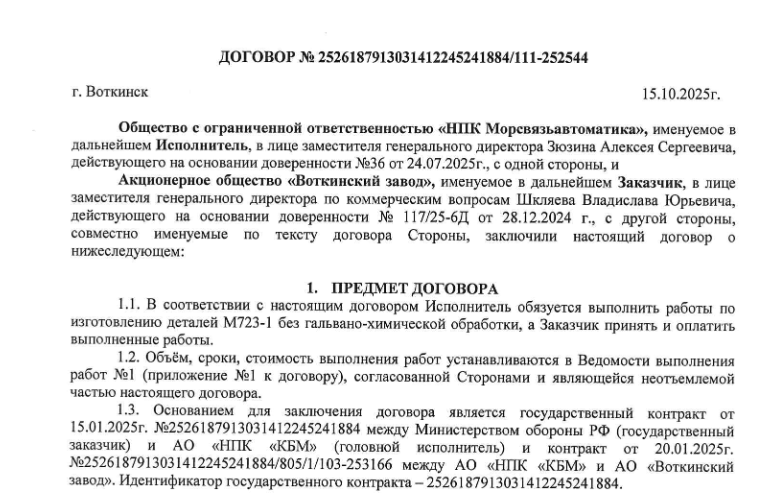
The subject of the contract? Manufacture of a batch of 4,000 units of precision parts: high-strength bushings, special brackets, rings, and, most importantly, metal nozzles (military item: 9M723.05.06.012). The execution of this strategic order has specific responsible persons: on the contractor’s side, Deputy General Director of LLC “NPK MSA” O. S. Zyuzin is responsible, while the work is accepted by Deputy General Director of JSC “Votkinsk Plant” V. Yu. Shklyaev. Direct oversight is carried out by 258th Military Representation of the Russian Ministry of Defense under the leadership of V. A. Kunshin.
Why is the nozzle such a critical element? A solid-fuel ballistic missile engine generates extreme temperatures and colossal plasma pressure during operation. The nozzle must be manufactured from a special refractory alloy with micron-level precision. The slightest defect in metalworking — and the missile will explode at launch or lose its trajectory. Manufacturing such parts requires unique CNC machines.
And these machines operate not in the underground facilities of the Votkinsk Plant, but on an ordinary street — 36 Teplovoznaya Street in Saint Petersburg.
Locating strategic ballistic missile production outside protected military zones creates an ideal target for asymmetric warfare. The absence of layered air defense and military security makes the Teplovoznaya site vulnerable. Destroying or damaging several CNC machines in this workshop will physically halt the supply of nozzles to JSC “Votkinsk Plant.” The Iskander production line will stop. In addition, the immediate inclusion of LLC “NPK Morsvyazavtomatika” on the SDN sanctions list will cut it off from machine servicing and the supply of carbide cutting tools.
Project “Gladiator-Air Defense”
For Ukrainian drones to be able to destroy Russian oil refineries and airfields without obstruction, Russian air defense must be blinded. The Russians understand this. That is why a strategic air defense modernization program under the codename “Gladiator-Air Defense” has been launched. The program’s objective is to create nonlinear radar countermeasure (NRCM) systems capable of detecting composite drones at ultra-low altitudes.
The main contractor for the project is Saint Petersburg-based JSC “NPP Radar MMS” — a top-tier systems integrator. The customer for this development, according to Contract No. 2025/176 dated 9 June 2025, is JSC “NPO Almaz” (TIN 7712040285, Moscow, 80 Leningradsky Ave., Building 16) under the leadership of General Director G. P. Bendersky. Their task is to create the “brain” and “heart” of the new radars. Special attention is being paid to the development of the latest uninterruptible power supply units ABP-27-24-3 (code TsIUL.436123.001) and UPS-54-400-48. During space scanning, an NRCM radar consumes a colossal amount of energy in pulsed mode. Ordinary generators cannot handle this; powerful battery buffers are required.
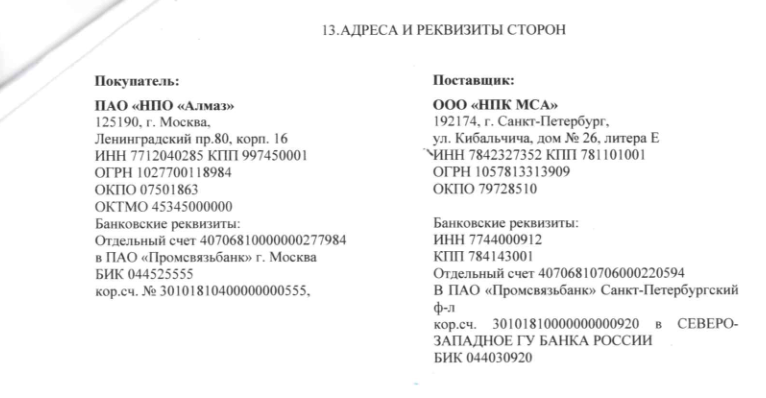
The entire development process takes place under the supervision of the 258th Military Representation of the Russian Ministry of Defense (acting head A. A. Smirnov). Military acceptance is strict GOST compliance, with checks for radiation resistance, temperature fluctuations, and vibration. But even the all-powerful 258th Military Representation proved powerless before the realities of the Russian economy.
The most interesting details were hidden in the technical specifications (TS). For ease of maintenance, a standard commercial interface, Ethernet (Fast Ethernet 100Base-TX), was integrated into the ABP-27-24-3 units. Through it, the power supplies transmit telemetry and allow remote control. The integration of civilian (COTS) protocols into military equipment is a gift for cyber intelligence.
Analysts from KRONOS dynamics identified another important location in Saint Petersburg included in the list of targets for kinetic strike. At 57 Karavaevskaya Street is an object designated as a Military Equipment Restoration Base. The inclusion of this address in the list is due to its role in the operational logistics chain. Although detailed financial documents analogous to the Morsvyazavtomatika contracts are currently absent from the leaks, its function as a repair node makes it critically important for disrupting the supply of restored enemy equipment.
The Battle for the Arctic and the Fleet’s Financial Trails
In conditions where the West is trying to cut off the oxygen supply to the Russian economy through sanctions on maritime transport, the Northern Sea Route (NSR) becomes Moscow’s lifeline. It is the shortest route to Asia, fully controlled by Russia. But for it to function year-round, a colossal fleet of nuclear icebreakers and powerful military infrastructure to protect them are required.
At the center of this strategy is Saint Petersburg-based JSC “Baltic Shipyard” (Saint Petersburg, 16 Kosaya Line). It is the only place in Russia capable of building super-heavy Project 22220 nuclear icebreakers (including the flagship “Sibir,” whose equipment repair also takes place there). In addition, shipbuilding infrastructure (including JSC “PO Sevmash” in Arkhangelsk Oblast) is involved in the construction of strategic nuclear-powered missile submarines: Project 885M “Yasen-M” (for example, the cruiser “Perm”, hull No. 165, which is to be delivered in 2025) and Project 955A “Borei-A” (for example, “Prince Pozharsky”). Without Western machine tools, European pumps, and life-support systems, these programs constantly face critical delays.
In the conditions of the Far North, naval shore bases must be completely autonomous. For this purpose, the latest autonomous power supply systems (APS) “Prometey-NGO” (TsShIL.565111.001 TS) were developed. Analysts at KRONOS dynamics found that all procurement of these systems takes place under conditions of absolute secrecy. Contracts are automatically classified as “For Official Use Only” (FOUO). Paper originals are kept in State Defense Order safes, and payments are made outside the international SWIFT system, through domestic Russian banks
But financial traces cannot be hidden. Analysis of the postings of the Financial and Economic Services (FES) allowed us to precisely identify the end customers of this equipment — the command headquarters of Arctic logistics:
- Headquarters of the Northern Fleet (military unit 90719 under the cover of FKU “51 FES” of the Russian Ministry of Defense). This is the brain center. Address: 1 Vostochnaya Street, Severomorsk, Murmansk Oblast, closed city, 184600 (TIN 519001001, OGRN 1245100001959).
- Baltic logistics hub (military unit 81357, FKU “78 FES” of the Russian Ministry of Defense): 15 Kostyleva Street, Lomonosov, Saint Petersburg, 198412.
- Arkhangelsk transport hub (military unit 90384, FKU “29 FES” of the Russian Ministry of Defense): 81 Nikolsky Prospekt, Arkhangelsk, 163020 (TIN 2902091507).
For a deeper understanding of the scale of militarization of Russian shipyards, analysts from “KRONOS dynamics” gained access to the closed registry “Base_of_ships_under_construction_RF_July_2025”. Analysis of this data set (a total of 2,497 vessels at various stages of construction) ruthlessly dispels the myth of the “peaceful nature” of Russian shipbuilding. A quarter of the country’s capacity works exclusively for war.
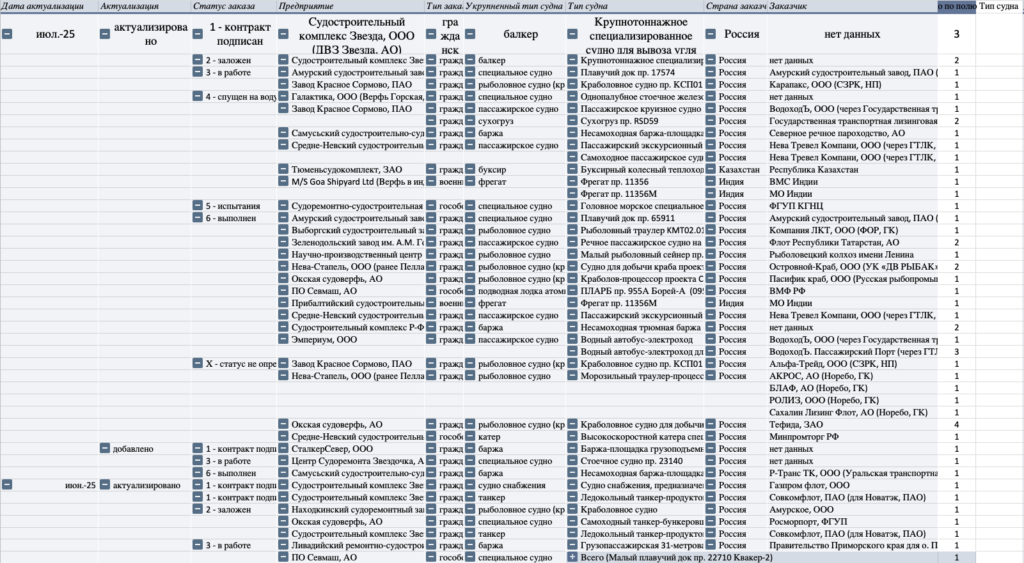
Macro Indicators of the State Defense Order (SDO): According to the obtained registry, there are currently 559 ships and vessels under active construction financed under the “State Defense Order” line. The absolute monopolist is the Russian Navy (RF Navy) — 254 orders, followed by other structures of the Russian Ministry of Defense (127), as well as militarized agencies: the National Guard (25) and the FSB of the Russian Federation (19).
This statistics demonstrates a clear shift in the enemy’s priorities: under conditions of positional warfare on land, Russia is simultaneously preparing for global dominance at sea (particularly in the Arctic).
The distribution of military orders identified the most heavily loaded, and therefore the most strategically important, shipyards:
- LLC “Kingisepp Machine-Building Plant” (48 orders) — mass production of small boats (including unmanned platforms) for patrol and sabotage operations.
- JSC “Yaroslavl Shipbuilding Plant” (33 orders) and JSC “Northern Shipyard” (30 orders) — construction of corvettes (a total of 46 corvettes are recorded in the database at various stages) and support vessels.
- JSC “Zelenodolsk Plant named after A. M. Gorky” (30 orders) — a key hub for the construction of small missile ships, which carry Kalibr cruise missiles.
The situation at the giant Sevmash enterprise is of particular concern, where 29 of the most capital-intensive orders are concentrated. The registry records an unprecedented scale of nuclear submarine construction (a total of 51 nuclear submarines across the Russian Federation). At Sevmash alone, the following are currently being built:
- 11 strategic missile carriers of Project 955A “Borei-A” (carriers of intercontinental ballistic missiles).
- 10 multipurpose nuclear cruisers of Project 885M “Yasen-M” (carriers of hypersonic “Zircon” and “Kalibr” missiles).
*The stated total figure — “51 nuclear submarines across the Russian Federation” at various stages of construction — is presented as aggregated information from the registry. The construction of 21 submarines at Sevmash is detailed (11 of Project 955A and 10 of Project 885M).
There is also an ongoing, multi-year, and extremely expensive modernization of the heavy nuclear missile cruisers of Project 11442M “Orlan”.
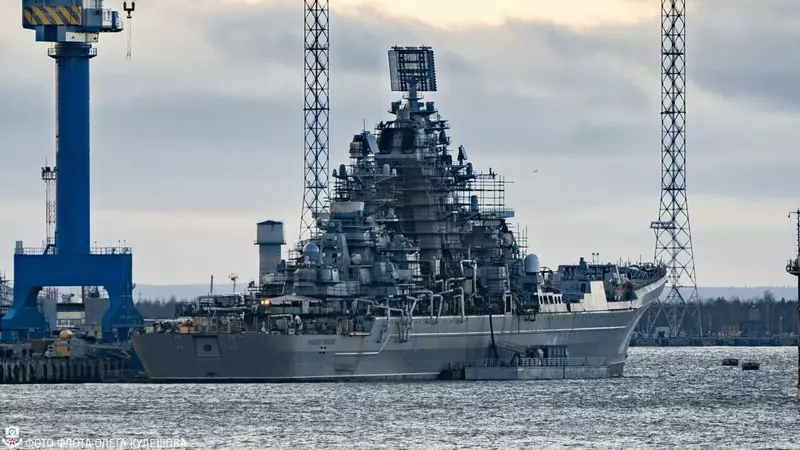
The concentration of 51 nuclear submarines at various stages of construction (mostly at northern shipyards) confirms our thesis: protecting the Northern Sea Route and Arctic bases is an existential priority for the Kremlin. Any sabotage aimed at the logistics hubs of these shipyards (such as disrupting the supply of “Prometey-NGO” autonomous power systems or damaging the port infrastructure of Sevmash) could delay the delivery of strategic submarines by years, inflicting irreparable damage on the Russian Federation’s nuclear triad.
Parallel Imports
The main myth spread by Russian propaganda is that “sanctions do not work.” Our investigation proves the opposite: sanctions do work, they inflict colossal damage; Russia is simply willing to pay any price to buy the equipment it needs.
Leaks from the State Defense Order database show a catastrophic picture for the Russian budget. The disruption of deliveries of large landing ships due to European manufacturers’ refusal to supply marine diesel engines and gearboxes is only the tip of the iceberg.
To circumvent the embargo, the FSB and relevant ministries built a multi-layered parallel import network. Goods (for example, electronics or machine tools) are purchased by a shell company in Turkey or the UAE, then resold to Central Asia, and only from there do they reach the Russian Federation. Each intermediary in this chain takes its commission. Bribes to customs officials in third countries are added. As a result, there is a systemic increase in the cost of SDO contracts after they are signed. Added to this is the growing tax burden (from 1 January 2026, the VAT rate in the Russian Federation was raised to 22%). The Russian taxpayer pays for weapons at one and a half to two times the prewar price. The army receives less equipment.
This is a direct consequence of economic isolation.
Since the procurement of specialized military chips (Military Grade) is almost impossible, Russian engineers are massively redesigning schematics to use commercial off-the-shelf components (COTS — Commercial Off-The-Shelf). The same Ethernet network controllers or basic memory chips that go into household appliances are being smuggled into Russia on a massive scale and installed in air defense radar power supplies or drone navigation systems. For example, instead of military cooling fans, ordinary civilian fans YWF-4E-450S are used for JSC “Kurganmashzavod,” ordered from the same LLC “NPK MSA” for 19.7 thousand rubles under invoice No. 9933 dated 3 December 2025. The quality and reliability of such weapons are rapidly declining.
Targeting List for the Defense Forces and Diplomats
This analytical report was created not for the archive. It is a direct call to action. Below is the final distribution of verified targets, confirmed by OSINT data and leaks of financial documents.
Part 1. Kinetic Strike (ATACMS, Storm Shadow, UAVs, SOF)
- Production site at 36 Teplovoznaya Street (Saint Petersburg). Target for Special Operations Forces. Objective — destruction of imported CNC machine tools for metalworking of Iskander ballistic missile nozzles.
- Repair site at 57 Karavaevskaya Street (Saint Petersburg). Military equipment restoration base.
- Power supply facilities (APS “Prometey-NGO”) of Arctic logistics headquarters: military unit 90719 (1 Vostochnaya Street, Severomorsk), military unit 81357 (15 Kostyleva Street, Lomonosov), and military unit 90384 (81 Nikolsky Prospekt, Arkhangelsk).
Part 2. Sanctions Strangulation
- Shadow intermediary companies (Front Companies):
- LLC “NPK Morsvyazavtomatika” (TIN 7842327352). Inclusion in the SDN sanctions list (U.S.) and corresponding EU lists. Objective: a complete ban on the export of European metalworking equipment and machine-tool software, and the freezing of foreign accounts. This company is not civilian — it manufactures missile components.
- Air defense electronics integrators:
- JSC “NPP Radar MMS” and JSC “NPO Almaz” (TIN 7712040285). Systems integrator, developer of radar power supplies (ABP-27-24-3). Inclusion in sanctions will cut them off from Asian LiFePO4 battery markets and civilian telemetry (Ethernet controllers), paralyzing the production of air defense systems.
- Secondary Sanctions:
- JSC “Votkinsk Plant” (TIN 1828020110), JSC “NPK KBM” and JSC “Baltic Shipyard”. These giants are already under sanctions, but the West must impose strict “secondary sanctions” on any banks in China, the UAE, or Turkey that conduct transactions for their subsidiaries or third-tier companies.
The cyber investigation by “KRONOS dynamics” continues. Every data leak, every hidden contract brings closer the moment when the shadow empire of the Russian defense-industrial complex will be deconstructed down to the last screw.
Institute for Social Dynamics and Security KRONOS
The investigation actively used OSINT tools and artificial intelligence, including the Gemini and Grok models. OSINT methods made it possible to collect and analyze open data from various sources, including social networks, public databases, and web resources. Gemini provided deep analysis of textual data, pattern detection, and forecasting, while Grok, created by xAI, was used to process complex queries and generate precise conclusions based on large volumes of information. The combination of these technologies significantly accelerated the investigation process, improved the accuracy of the results obtained, and revealed connections that might have remained unnoticed by traditional methods.