
While the front line is measured in kilometers of liberated or lost territory, another, invisible but no less existential battle is unfolding in Ukraine. It is a battle for the state’s digital arteries, for the privacy of its citizens, for the resilience of critical infrastructure, and, ultimately, for national sovereignty in cyberspace.
The paradox of contemporary Ukrainian reality lies in the fact that, while defending its independence from Russian armed aggression at the cost of superhuman effort and lives, the state for years voluntarily integrated into its bloodstream technologies from a country that is a strategic partner of the aggressor.
Chinese surveillance cameras, facial recognition systems, telecommunications equipment, and power inverters have quietly but comprehensively saturated Ukrainian streets, government institutions, military logistics routes, and energy generation facilities.

By purchasing a Hikvision or Dahua camera, or a Huawei router, the buyer is not merely acquiring a piece of plastic and silicon. They are voluntarily installing into their network a device whose manufacturer is legally obliged to provide access to any data at the first request of the Communist Party of China. Given the unprecedentedly close strategic partnership (“friendship without limits”) between Beijing and Moscow, the risk of transferring sensitive video information from Ukrainian streets to Russian special services (FSB, GRU) is not merely hypothetical — it is a direct and persistent threat to national security.4
Scale of Penetration
To grasp the real scale of this problem, one must look at the statistics. The Chinese technology giant Hikvision produces approximately 20% of all surveillance cameras in the world, while Dahua accounts for another 10%.9 Thanks to aggressive pricing policies subsidized by the Chinese government, these brands have monopolized the markets of many countries, including Ukraine.8 Today, hundreds of thousands of such devices are installed in Ukraine.8
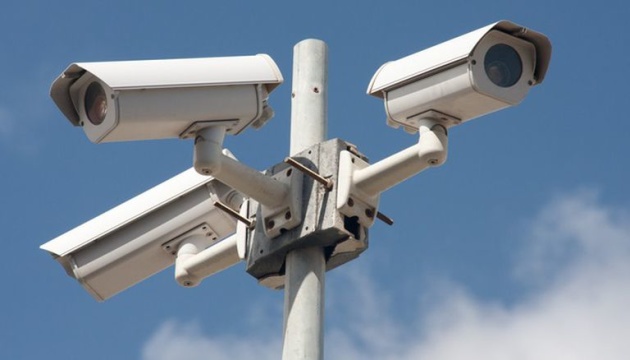
The absence of a direct legal ban (despite the NACP’s recognition of these companies as “international sponsors of war”) has led to a paradoxical situation. In 2023, the total number of potentially dangerous cameras purchased by state institutions increased almost threefold compared with 2022.11 Of the 15,894 cameras procured through ProZorro, 57% were products of Chinese sanctioned brands.11
What exactly makes these cameras so dangerous? Hikvision and Dahua cameras (especially 2015–2019 models) automatically connect to the manufacturer’s servers and transmit telemetry, passwords, or directly the video stream, which is easy to decrypt.4 In addition to built-in data transmission functions, these cameras are characterized by catastrophic vulnerability to external hacking attacks: sometimes 15 minutes is enough to compromise a device.4
To understand how critical this vulnerability is, it is worth examining the experience of using cameras and foreign software in the Middle East as a tool for weapons targeting. Modern warfare has proven that surveillance cameras are a direct means of intelligence gathering. During the recent escalation of the conflict, Israeli intelligence had access for years to a hacked network of road cameras in Tehran, which allowed it to study the “patterns of life” of senior officials, security routes, and carry out a precision missile strike on Ali Khamenei’s residence.
On the other hand, Iranian state-linked hackers massively compromised Hikvision and Dahua IP cameras in Israel and the Gulf states. As cybersecurity experts note, this breach was used directly for Battle Damage Assessment and for adjusting missile strikes in real time, sometimes just minutes before ballistic missiles hit.

This precedent demonstrates that the presence of foreign, technically vulnerable surveillance systems on the streets is a critical vulnerability that can be exploited for direct military intervention.
And here a natural and terrifying question arises: are the very same cameras that were massively installed by the Ministry of Internal Affairs and local authorities, purchased cheaply in tenders, being used today to support Russian Armed Forces strikes against Ukraine? The answer is obvious: free (or suspiciously cheap) cheese exists only in a mousetrap. The desire of Ukrainian officials to save budget funds by purchasing Chinese security systems results in Russia receiving a practically legal and free intelligence network.
This is not a theory, but a proven fact.
Russian special services deliberately hack vulnerable Hikvision and Dahua cameras in order to track the work of Ukrainian air defense in real time and adjust missile and drone terror.
Attacked Regions
To truly understand how strategic mistakes at the state level are multiplied locally, it is necessary to examine the situation in the regions that are under enemy targeting every day. Although the statistical anti-leader in Ukraine is Kirovohrad Oblast (where 100% of cameras purchased with budget funds in 2023 belonged to sanctioned Chinese brands 11), the most glaring example of thoughtless decisions is the mass procurement of dangerous equipment in frontline regions — logistics hubs that are regularly subjected to Russian missile and drone terror.

Dnipropetrovsk and Kharkiv oblasts are key arteries for supplying the Armed Forces of Ukraine and constant targets of Russian attacks. Despite this, local budgets and law enforcement agencies continue to saturate these territories with Chinese surveillance. In 2023, 1,602 cameras were purchased in Dnipropetrovsk Oblast, of which a staggering 93% were products of sanctioned brands Hikvision, Dahua, and Tiandy.11 In Kharkiv Oblast, 1,185 cameras were purchased, a significant share of which (40%) were also of Chinese origin.11
Particular concern is caused by the aggressive introduction of expanded functionality — identification systems. A telling example is Poltava Oblast, which is a strategic transit region and regularly suffers from missile and drone attacks. At the end of 2024, the Main Directorate of the National Police in Poltava Oblast concluded contracts for the modernization of the “Safe Poltava Oblast” integrated system worth UAH 1.77 million. Instead of seeking safe European or Japanese analogues, the tender documentation directly and exclusively specified technical characteristics tailored to specific models of the Chinese Hikvision brand. Law enforcement purchased cameras with intelligent license plate and facial recognition functions, as well as Dahua network switches.
By installing hundreds of cameras with identification algorithms at key intersections, highways, and public places in Dnipro, Kharkiv, or Poltava, the authorities are effectively creating, with their own hands, an ideal bridgehead for enemy intelligence. Every movement of military convoys, the location of new checkpoints, the routes of air defense and rescue services after “arrivals” — all of this is digitized around the clock. As experiments have shown, through built-in backdoors this video stream can be sent to the servers of Chinese companies, from where, under allied arrangements between Beijing and Moscow, it easily reaches the hands of the FSB or GRU. The blind faith of officials that the cheapest offer in a ProZorro tender is the best one turns the security systems of frontline cities into a weapon of self-destruction.
Draft Law No. 11031
The problem of frontline regions is not unique — it is a symptom of a systemic disease of public administration. Despite the obvious, documented evidence of the vulnerability of Chinese hardware, the state apparatus not only continues to use it, but also seeks to enshrine mass surveillance of citizens in law.

The Ministry of Internal Affairs (MIA) of Ukraine is trying to reassure the public by claiming that about 24,000 of its Dahua and Hikvision cameras (74% of the MIA’s fleet) are located in a closed local network (Intranet) that supposedly has no access to the public internet.4 However, the architecture of an isolated local network is reliably protected only until the slightest internet exit point appears (through negligence, software updates, or an internal hack). Backdoors in Chinese hardware are capable of bypassing local firewalls and creating hidden tunnels upon any network connection.
The draft law provides for indiscriminate profiling of all citizens (retention of movement data for up to 15 years) and automatic cross-checking of faces against Ukraine’s most sensitive databases.13 Moreover, the document obliges owners of private surveillance systems to transmit video streams to state authorities.5 Ukraine will be forced to build this unprecedented surveillance system on 74% of the same cheap Chinese equipment, making it an ideal target for foreign (Russian or Chinese) intelligence.5
RF Hybrid Threats
The risks of Chinese technological expansion are not limited to municipal video monitoring systems. A much greater, strategic macroeconomic and purely military threat is posed by the deep penetration of corporations (in particular Huawei) into Ukraine’s telecommunications and critical energy infrastructure.14

Ukraine’s largest telecommunications operators still continue to test next-generation networks (including 5G) based on Huawei equipment.15 What will happen if China, in accordance with its National Intelligence Law, begins systematically transferring to Russian military intelligence the data collected from this equipment?
Operations to Adjust Terror and Intelligence via Telecom Data:
If the Russian Federation gains access to information from the Chinese communication nodes of Ukrainian operators, the Russian army will be able to conduct devastating operations.
- Precise geolocation of military personnel and civilians: Russians will be able to obtain large datasets of geolocation data on the movements of Ukrainian soldiers and identify concentrations of people and equipment simply by analyzing traffic and smartphone connections to mobile base stations.
- Adjustment of drone and missile terror: Using telemetry data from mobile networks or smart devices (including built-in microphones and cameras), Russia will be able to precisely guide kamikaze drones and missiles. It is already known today that Russian drones scan mobile towers and Ukrainians’ SIM cards. Having direct access to the internal network architecture through Chinese equipment, kamikaze drones will be able to bypass Ukrainian air defense zones or strike the weakest points.
- Synergy with GLONASS: The integration of the Russian GLONASS navigation system with the Chinese Beidou satellite network and the use of Chinese components are already helping the Russian Armed Forces adjust their ballistic missiles and drones during strikes on Ukraine. The transfer of additional telecommunications data from Chinese companies will turn this cooperation into an ideal killing system.
The true, apocalyptic scale of the threat is also revealed in the energy sector. Solar power has turned out to be critically dependent on Chinese inverters — the “brain centers” of power plants. Huawei is the undisputed leader, controlling up to 80% of the global market.16 Since inverters must be connected to the internet, they are a target for cyberattacks.
In Washington, it is openly stated that China is creating this mechanism as a lever of global blackmail.16 Some European countries (Lithuania, Germany) have already begun investigations and are banning Chinese components at their strategic facilities.14
Ukraine, however, continues to ignore these risks at the systemic level.
Japanese Vector
Recognizing the existential nature of digital and infrastructure threats from autocracies, the progressive world is forming new geopolitical and technological alliances. For Ukraine, which stands on the threshold of the largest national reconstruction of the 21st century, the only rational, safe, and forward-looking path of development is a decisive rejection of Chinese technological diktat. Instead, deep systemic integration is needed with countries that adhere to democratic principles of data governance, respect human rights, and guarantee the inviolability of private property. The principal and most consistent strategic partner on this path is Japan.
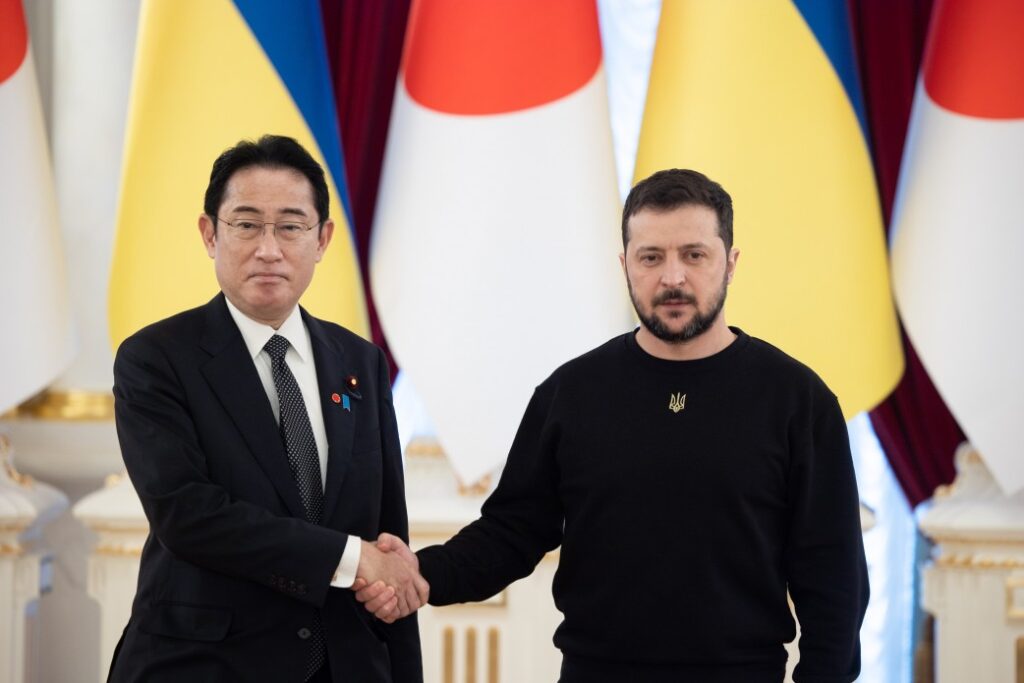
The conceptual foundation of this partnership is the large-scale U.S.-Japanese “Clean Network” initiative.19 This comprehensive program was launched by the U.S. administration in 2020 as a global coalition of “freedom-loving countries” and “trusted partner companies.”19 Its main goal is to raise global cybersecurity by uncompromisingly displacing unreliable technology companies linked to authoritarian governments (primarily Huawei, ZTE, and other Chinese vendors) from national telecommunications networks and supply chains.19
The Clean Network program is comprehensive and not limited to mobile antennas. It creates a protective barrier at all levels of digital infrastructure:
- Clean Carrier: Preventing Chinese telecommunications companies from connecting to international networks.19
- Clean Store: Removing unreliable Chinese applications from mobile platforms, as they threaten privacy and spread propaganda.19
- Clean Apps: Preventing Chinese applications from being preinstalled on smartphones.19
- Clean Cloud: Protecting citizens’ most sensitive personal information and companies’ intellectual property from storage and processing on cloud services accessible to foreign adversaries (such as Alibaba, Baidu, Tencent).19
- Clean Cable: Ensuring the security of transoceanic submarine communication cables from data interception by PRC intelligence.19
- Clean Path: Requiring all network traffic of diplomatic institutions and military facilities to pass exclusively through secure equipment.19
Dozens of European Union countries, Japan, the United Kingdom, Australia, Canada, Israel, New Zealand, and Taiwan have already joined this digital alliance.21 Participation requires states to have the political will to fully remove espionage equipment from state, municipal, and critical networks.
Japan is one of the key architects and drivers of this containment policy in the Asia-Pacific region.6 Tokyo not only sends Kyiv non-public warnings about the inadmissibility of using Chinese equipment (in particular Huawei) in the future architecture 15, but also offers entirely real, financially backed, and technologically advanced alternatives for building Ukraine’s protected infrastructure.24
The foundation of a new era of bilateral cooperation was the Ukrainian-Japanese business platform for infrastructure technologies for recovery and reconstruction, symbolically named JUPITeR (Japan-Ukraine Platform for Infrastructure Development and Reconstruction).24 The platform was officially launched in January 2024 by the Ministry for Communities and Territories Development of Ukraine together with the Government of Japan.24
This initiative differs radically from traditional, often corrupt and lowest-price-oriented procurement tenders. The main goal of the JUPITeR platform is the systematic engagement of the Japanese private sector and the integration of advanced, secure Japanese technologies into the reconstruction of Ukraine’s critical infrastructure, housing stock, and transport networks.25
The platform’s focus is Japan’s colossal, unique experience in disaster recovery (rapid infrastructure restoration after disasters and destruction).25 More than 190 leading Japanese companies have already joined the initiative.25 During special government meetings in Kyiv, representatives of Japan’s Ministry of Land, Infrastructure, Transport and Tourism and 23 major corporations proposed innovative solutions in complex engineering, logistics, urban development, and secure green energy.24 One of the most promising areas of cooperation is the introduction of Japanese remote construction technologies, which are critically important for Ukraine given the total mine danger in de-occupied territories and the acute shortage of skilled labor due to mobilization.25
Japan offers Ukraine not merely financial injections. It offers a closed, reliable, ecosystem-based alternative to the toxic, autocratic influence of Chinese corporations. Cooperation with Tokyo automatically means the implementation of the world’s highest cybersecurity standards, protection of intellectual property, and complete isolation from hardware linked to PRC intelligence and its allies.
Conclusions:
An examination of the current state of Ukraine’s technological and telecommunications infrastructure reveals a deep, dangerous contradiction in state policy. On the physical battlefield, the state defends its right to exist, bleeding in confrontation with the Russian aggressor. However, in cyberspace, its own institutions — from the leadership of the Verkhovna Rada and the Ministry of Internal Affairs to the city councils of ordinary regional centers — demonstrate glaring, at times criminal, negligence.
Given the Iranian precedent of guiding ballistic strikes through spy cameras, as well as the use of hacked cameras by the Russian Armed Forces against Ukraine, the continued operation of such devices is suicidal for the state. The desperate attempt to legalize continuous profiling of citizens through draft law No. 11031 (which contains no effective data protection guarantees) 5 indicates the temptation among Ukrainian ruling elites to follow the path of digital authoritarianism. And the situation in frontline regions such as Dnipropetrovsk and Poltava oblasts, where authorities have for years been building municipal security systems on Chinese equipment, vividly illustrates the complete absence of systemic coordination between central cybersecurity bodies and local self-government authorities.
Huawei’s total dominance in the inverter market 16, with its hidden ghost radio transmitters 18, creates a real possibility of a remote blackout of the country. If China transfers communications data, Russia gains the keys to precise intelligence and the adjustment of drone attacks through tracking the geolocation and traffic of military personnel and civilians. Taken together, this means that China, by maintaining close ties with the Russian Federation, acquires an existential lever of influence over Ukraine’s national security.
The way out of this deep institutional crisis does not lie in isolated bans at the level of individual municipal tenders, but in a radical, systemic strategic reorientation of the state. The Japanese vector of technological development, institutionalized through the JUPITeR reconstruction platform 25 and MIGA risk insurance guarantees 26, offers Ukraine the only correct, democratic model of reconstruction. Accession at the state level to the global Clean Network initiative 19 and the strict, unequivocal exclusion of high-risk Chinese suppliers from infrastructure tenders must become a binding legislative imperative.

Every thousand hryvnias saved today by an official or the MIA on the purchase of a Chinese camera turns tomorrow into lost lives through free adjustment of Russian missile strikes, a paralyzed power system, and the surrender of communications to the enemy. Ukraine has a unique historical chance to build resilient, security-oriented infrastructure with the help of advanced Japanese technologies.
But in order to take advantage of this window of opportunity, the state must finally purge its networks of Chinese Trojan horses.
The investigation actively used OSINT tools and artificial intelligence, including the Gemini and Grok models. OSINT methods made it possible to collect and analyze open data from various sources, including social networks, public databases, and web resources. Gemini provided in-depth analysis of textual data, pattern detection, and forecasting, while Grok, created by xAI, was used to process complex queries and generate precise conclusions based on large volumes of information. The combination of these technologies made it possible to significantly accelerate the investigation process, improve the accuracy of the results obtained, and identify connections that might have remained unnoticed by traditional methods.
Sources
- ODNI 2025 Threat Assessment notes threats from Russia, China, Iran, North Korea targeting critical infrastructure, telecom – Industrial Cyber, https://industrialcyber.co/reports/odni-2025-threat-assessment-notes-threats-from-russia-china-iran-north-korea-targeting-critical-infrastructure-telecom/
- The CyberThreat Report: April 2025 – Trellix, https://www.trellix.com/advanced-research-center/threat-reports/april-2025/
- NATO CCDCOE Library, https://ccdcoe.org/library/publications/
- Chinese surveillance cameras: what is the danger – Hrechka, https://gre4ka.info/suspilstvo/u-kropyvnyczkomu-vstanovleni-kytajski-kamery-videosposterezhennya-chym-vony-mozhut-buty-nebezpechni/
- Draft law on video monitoring: protection of public safety or … , https://dslua.org/publications/zakonoproiekt-pro-videomonitorynh-zakhyst-publichnoi-bezpeky-chy-litsenziia-na-masove-stezhennia/
- Indonesia’s 2024 Presidential Election: Sectarianism Out, Dynasty In, Democracy Tethered, https://www.researchgate.net/publication/393680499_indonesia’s_2024_presidential_election_sectarianism_out_dynasty_in_democracy_tethered
- China Amends Cybersecurity Law and Incident Reporting Regime to Address AI and Infrastructure Risks | Inside Privacy, https://www.insideprivacy.com/cybersecurity-2/china-amends-cybersecurity-law-and-incident-reporting-regime-to-address-ai-and-infrastructure-risks/
- Hundreds of thousands of Chinese cameras are operating in Ukraine and transmitting data to the manufacturer’s servers — Schemes, https://nv.ua/ukr/ukraine/events/kameri-videosposterezhennya-z-kitayu-peredayut-dani-virobniku-rozsliduvannya-shem-50387293.html
- In Ukraine, hundreds of thousands of Chinese surveillance cameras may transmit information to PRC servers — Schemes – Suspilne, https://suspilne.media/669934-v-ukraini-sotni-tisac-kitajskih-kamer-videosposterezenna-mozut-peredavati-informaciu-na-serveri-knr-shemi/
- Chinese surveillance cameras in Kyiv may transmit data, investigation says – Hmarochos, https://hmarochos.kiev.ua/2024/01/26/kytajski-kamery-videosposterezhennya-v-kyyevi-mozhut-peredavaty-dani-jdetsya-v-rozsliduvanni/
- Budget-funded institutions are buying dangerous cameras during the war …, https://nikcenter.org/byudzhetnyky-pid-chas-vijny-zakupovuyut-nebezpechni-kamery-videosposterezhennya/
- Surveillance from China. How thousands of Chinese surveillance cameras in Ukraine transmit information and why it is dangerous – Vchasno, https://vchasno.org.ua/policy/nahliad-z-kytaiu-yak-tysiachi-kytayskykh-kamer-videosposterezhennia-v-ukraini-peredaiut-informatsiiu-i-chomu-tse-nebezpechno/
- The MIA is accelerating total video monitoring in …, https://www.ukr.net/news/details/society/106879448.html
- Dangerous dependence on China: Huawei solar technologies threaten Europe’s power grids – Glavkom, https://glavcom.ua/new_energy/news/nebezpechna-zalezhnist-vid-kitaju-sonjachni-tekhnolohiji-huawei-zahrozhujut-enerhomerezham-jevropi-1085817.html
- Tokyo sounds the alarm: Huawei (Chinese intelligence) will gain a foothold in Ukraine’s future reconstruction | SPILNO, https://spilno.org/news/tokio-bye-na-spolokh-huawei-kytaiska-rozvidka-otrymaye-platsdarm-u-maibutnii-vidbudovi-ukrainy
- The U.S. sounds the alarm: China could switch off the lights in the West at any moment – TSN, https://tsn.ua/svit/ssha-biut-na-spolokh-kytay-moze-vymknuty-svitlo-na-zakhodi-v-bud-iakyy-moment-2840033.html
- Europe is preparing restrictions on Chinese solar technologies: what happened – Glavkom, https://glavcom.ua/new_energy/news/jevropa-hotuje-obmezhennja-dlja-kitajskikh-sonjachnikh-tekhnolohij-shcho-stalosja-1085289.html
- Chinese inverters with a backdoor — a threat of the largest blackout in history – Eco-Volt, https://eco-volt.com.ua/blog/amerikanskiye-energetiki-nachali-pereotsenku-riskov-svyazannykh-s-ispolzovaniyem-kitayskikh-komponentov
- The International Political Economy of Submarine Internet Cables: Analyzing Changes in US Cable Policies, https://tesi.luiss.it/39477/1/648752_ROBBIANO_LORENZO.pdf
- The Lost Peace: How the West Failed to Prevent a Second Cold War 9780300265613, https://dokumen.pub/the-lost-peace-how-the-west-failed-to-prevent-a-second-cold-war-9780300265613.html
- The Power Atlas – European Council on Foreign Relations, https://ecfr.eu/wp-content/uploads/power-atlas.pdf
- The Fellows Review – Center for the Study of the Presidency and Congress, https://teal-seal-s2cs.squarespace.com/s/2020-2021-Fellows-Review-e3bl.pdf
- Submarine Telecoms Industry Report Issue 11 – Issuu, https://issuu.com/subtelforum/docs/submarine_telecoms_indsutry_report_issue_11
- Ukraine and Japan are establishing cooperation to engage the private sector in reconstruction | Ministry for Communities and Territories Development of Ukraine, https://mindev.gov.ua/news/ukraina-ta-iaponiia-nalahodzhuiut-spivpratsiu-dlia-zaluchennia-pryvatnoho-sektoru-u-vidbudovu
- Japanese companies will share experience in Kyiv on rapid and technological recovery, https://www.ukrinform.ua/rubric-ato/4098086-aponski-kompanii-podilatsa-v-kievi-dosvidom-svidkogo-ta-tehnologicnogo-vidnovlenna.html
- Japan will be the first to cover war risks for investments in Ukraine – Ekonomichna Pravda, https://epravda.com.ua/news/2023/04/18/699246/
- UNIDO signs grant agreements with 47 Japanese companies to test their technologies and business models in Ukraine,