In the modern geopolitical discourse of European and North Atlantic institutions, a traditional approach to assessing military risks dominates. A significant portion of analysts and politicians continues to prepare for classic conventional scenarios, such as a direct tank offensive by the Armed Forces of the Russian Federation from the territory of Belarus or massive missile-drone strikes on critical infrastructure of NATO countries, which implies the direct physical presence of regular Russian troops. However, a deep systemic analysis, which is conceptually shared by advanced research centers, particularly within the framework of the “Kronos” Institute paradigm, points to the implementation of a much more insidious, asymmetric, and highly effective scenario. This scenario does not focus on breaching the Alliance’s external borders but is aimed at the internal implosion of European states by exploiting smoldering socio-political, economic, and cultural rifts.
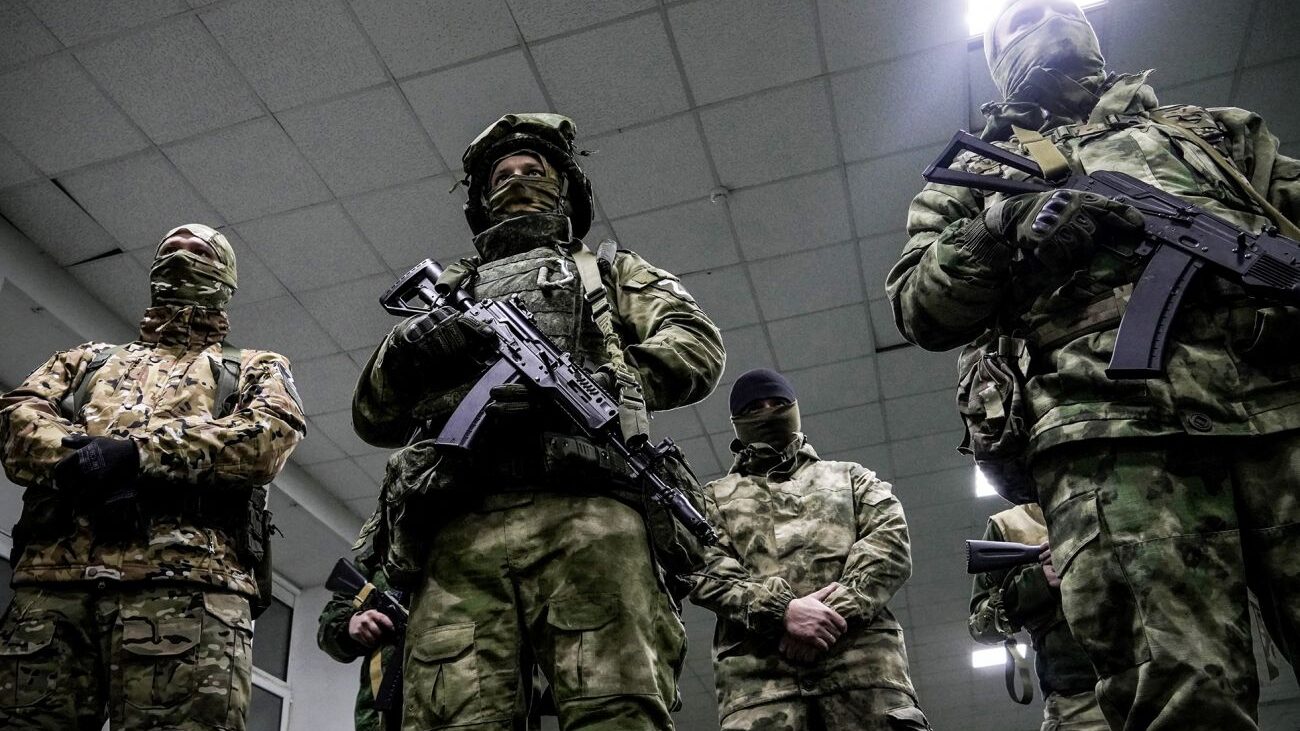
The strategy of the Russian Federation is based on the gradual local fortification of illegal quasi-state entities or autonomous enclaves within the sovereign territories of the European Union. These actions are extremely targeted, systemic, and long-term. Their methodology resembles the “boiling frog” effect: a slow, initially imperceptible to democratic institutions increase in the temperature of social tension, which paralyzes the state’s ability to resist in a timely and rigid manner.
Before moving to the physical fortification phase, the target state is subjected to intense destabilization using social technologies. There is a direct influence on electoral processes, discontent with the current political course is hyperbolized, and fear of economic decline and the migration crisis is stimulated. On this ground, extensive networks of agents sympathetic to the RF are formed, which become the hidden vanguard of the future theater of military operations. The task of these networks is to wage war in a closed space (urban agglomerations, infrastructure nodes), which is coordinated exclusively by Russian intelligence services without the open involvement of the regular Russian army.
To prepare this theater of operations, Russian intelligence networks of various calibers are actively working in the information space. They raise a wave of public discontent, hyperbolize it through social media algorithms, and identify radicalized elements that are psychologically prepared for violent actions. Simultaneously, groundwork is being laid for recruitment among migrants and refugees from CIS countries, many of whom are likely already in shadow agreements regarding the organizational part of the future rift in the EU. Russia demonstrates its strength and impunity through allegedly accidental missile-drone incursions into the territory of NATO countries. Russian propaganda instantly maximizes the psychological effect of the Alliance’s indecision, inclining the weak, vulnerable part of the European audience to the thought that Vladimir Putin is the strong side and strong leader, despite the fact that Ukraine has for years been proving the conventional powerlessness and barbaric nature of the Russian military machine.
Information Preparation of the Theater of Operations
The foundation of Russian subversive activity is the “reflexive control” doctrine, developed by Soviet military theorists (V. Lefebvre, M. Drach). Reflexive control involves passing specially prepared information (or creating conditions) to an adversary that compels them to independently make a decision that is predetermined and beneficial to the initiator of the operation. In the context of the modern European Union, this means creating a political climate in which European elites and societies voluntarily refuse to defend their own interests, support Ukraine, and strengthen collective security, guided by fear of escalation.
The operational space for physical destabilization is always formed in the information dimension. An analysis of the dynamics of RF information policy regarding European countries in the period leading up to 2026 demonstrates absolute structural identity with the actions of Russian special services in the east and south of Ukraine on the eve of the events of 2014 in Luhansk, Donetsk, and Crimea.
In the period from 2005 to 2014, Russia systematically cultivated separatist organizations in Ukraine, such as the NGO “Donetsk Republic.” Using linguistic, cultural, and historical differences, Russian propaganda purposefully constructed an image of a “radical enemy” in Kyiv and formed a local identity hostile to the central government. Economic fears and the threat of losing the status of the Russian language were hyperbolized, which allowed for the creation of a critical mass of discontented people who later became a human shield for Russian sabotage groups.
Today, a similar scenario has been deployed in the European Union, but adapted to local political rifts. Large-scale disinformation campaigns play a key role, such as the “Doppelgänger” (Clone) operation, coordinated by the Russian “Agency for Social Design” (SDA) under the leadership of Ilya Gambashidze and individuals closely linked to the Russian Presidential Administration. Russian IT companies, such as “Struktura,” create thousands of fake web pages that copy the design of leading European media (Der Spiegel, Le Monde, FAZ, The Guardian) and government portals. Instead of the language issue, the targets in the EU are topics of migration, deindustrialization, energy costs, as well as an artificially inspired “war fatigue.”
| Characteristics of the Operation | Ukraine (pre-2014) | European Union / Germany (pre-2026) |
| Key social rifts | Language issue, historical memory (WWII), orientation toward RF vs EU, status of regions. | Migration crisis, energy tariffs, inflation, fear of war escalation, radical climate agenda. |
| Influence tools | RF TV channels, financing of pro-Russian parties (Party of Regions, CPU), “Donetsk Republic” NGO, VKontakte networks. | “Doppelgänger” campaigns, “Storm-1516”, bot farms on X and Telegram, generative AI for deepfakes. |
| Main narrative | “Central government is illegitimate,” “threat of physical destruction of Russian-speakers,” “Donbas economy feeds Ukraine.” | “Government is destroying the country for the sake of Ukraine,” “sanctions are destroying European industry,” “NATO is provoking nuclear war with the RF.” |
| Electoral impact | Co-optation of regional elites, support for separatist politicians, marginalization of pro-Ukrainian forces. | Support for radical right (AfD) and left-conservative forces (BSW) in Germany, which promise “peace” with the RF. |
| Preparation for action | Formation of “self-defense squads,” fueling the anti-Maidan movement, weapons in cells. | Formation of networks of “disposable agents” through private chats, identification of radicals. |
The goal of these operations is not just to sow doubt, but to force citizens of Germany and other EU countries to believe that their governments are acting against national interests. The Federal Office for the Protection of the Constitution of Germany (BfV) has officially warned that in 2025–2026, Russia aims to radicalize public debates, create an atmosphere of “managed chaos,” and undermine trust in democratic institutions on the eve of decisive elections.
Russian information operations have a clear electoral dimension. In Germany, this manifests in the symbiosis of RF narratives with the programs of the far-right party “Alternative for Germany” (AfD) and the new left-conservative force “Sahra Wagenknecht Alliance” (BSW). These political projects are especially popular in the East German states (Saxony, Thuringia, Brandenburg), where a specific attitude toward Russia and a higher level of distrust in federal institutions historically persist.
BSW, for instance, represents a unique hybrid: left-wing socio-economic policy is combined with strict conservatism on migration issues and a categorical refusal of military support for Ukraine, demanding “peace” on Moscow’s terms. The infiltration of Russian narratives into these parties’ platforms expands the window of opportunity for the Kremlin. When millions of Germans begin to believe their own state is a “US puppet” and “hostile to the interests of the people,” they become a passive (or even active) support base for future hybrid attacks, just as a part of the Donbas population was disoriented before the arrival of GRU groups in 2014.
Terror
After the full-scale invasion of Ukraine in 2022, European countries expelled hundreds of Russian diplomats who were de facto career intelligence officers. Having lost their traditional agent network under diplomatic cover, the GRU (Main Directorate of the General Staff of the RF Armed Forces) and the FSB adapted their tactics by turning to the “gig economy” model in the sphere of sabotage.
Russian special services began mass recruitment of so-called “disposable agents.” These are low-skilled, often criminalized, or socially vulnerable individuals found through Telegram messengers, TikTok, and even video game platforms (for example, Twitch). Ads are usually masked as offers of “easy money.” Initially, curators hiding behind anonymous accounts offer to perform innocent tasks: take photos of a military base, a railway junction, or a logistics center. Then the degree of risk and reward grows: from graffiti (for example, Stars of David in Paris to incite antisemitic sentiment) to arson of warehouses (as in the case of a warehouse of a company helping Ukraine in London) and even physical attacks on opposition figures (the assassination attempt on V. Osechkin in France).
A particular threat is that many recruiters are former PMC “Wagner” mercenaries who use their experience in communicating with criminal elements and marginalized groups to effectively attract executors.
An extremely vile element of this strategy is the targeted recruitment of migrants and refugees from CIS countries, particularly from Ukraine and Belarus, living in Poland, Germany, and the Baltic states. Using their vulnerable financial state or applying blackmail regarding relatives who remained in occupied territories, Russian intelligence forces them to carry out acts of sabotage.
This has a catastrophic double effect:
- Physical damage is inflicted on critical NATO infrastructure (e.g., arson of shopping centers or sabotage on railway tracks through which weapons are delivered to Ukraine).
- The arrest of Ukrainians or Belarusians for sabotage is instantly picked up by Russian propaganda and local far-right radicals (that same AfD) to discredit all Ukrainian refugees, amplify xenophobia, and convince European society of the need to stop aid to Kyiv.
To finance these networks, exclusively cryptocurrency (Bitcoin, USDT) is used, which is transferred through shadow exchanges without KYC procedures. Disposable agents are promised from a few hundred to 10,000 euros, although they are often simply cheated, as they are “expendable” for the GRU.
| Type of attack / Task | Executors | Goal of RF | Known precedents (2023–2026) |
| Cyber-sabotage and disinformation | Hacktivists, IT companies (SDA, Struktura), bots | Changing public opinion, panic, paralysis of the government. | Doppelgänger campaign, cyberattack on Viasat satellites (impact on turbines in Germany). |
| Information-psychological vandalism | Teenagers, petty criminals (recruited via social media) | Inciting social, ethnic, and religious conflicts. | Painting Stars of David in Paris, leaving pig heads near mosques. |
| Intelligence and logistical sabotage | Migrants from CIS (Ukrainians, Belarusians), radicalized locals | Intelligence gathering on NATO routes, delaying aid to Ukraine. | Spying on Bundeswehr bases (MAD report), railway sabotage in Poland. |
| Physical terror and kinetic sabotage | Disposable GRU agents, former PMC “Wagner” | Creating an atmosphere of terror, destroying warehouses with aid. | Arrest of a group sending incendiary devices via DHL in Vilnius/Leipzig, arson of a warehouse in London. |
Nato Paralysis
While disposable agents shake the EU from within, Russia employs instruments of external psychological pressure through so-called “accidental” violations of NATO airspace by unmanned aerial vehicles (UAVs of the Shahed/Geran type) and missiles. Throughout 2024–2026, such incidents systematically occurred in Poland, Romania, Latvia, and Germany (near Leipzig airport and military bases).
These flights are not navigation system errors. This is a deliberate strategy of escalation probing in the “gray zone” (below the threshold of NATO Article 5), which aims at several operational and strategic goals at once:
- Reconnaissance and exposure of air defense: Drones collect information about the reaction time of European air defense systems and their radar blind spots.
- Testing political resolve: By crossing the border, Russia tests how far Western governments are prepared to go. The absence of a kinetic response (orders to shoot down targets) due to fear of escalation convinces the Kremlin of NATO’s weakness.
- Coercion through fear (Appeasement narrative): The main goal is psychological. When a drone flies over European cities with impunity for months, Russian propaganda uses this to humiliate the Alliance. It broadcasts the message: “NATO is an ineffective bureaucratic machine unable to protect you. The only way out is to negotiate with a strong leader, Putin.”
In conditions where Ukraine is successfully grinding down the Russian conventional potential, demonstrating the barbaric essence and technological limitations of the RF army, the Kremlin is forced to simulate global strength precisely through such hybrid incursions. They fuel the internal fear of Europeans, which is the perfect soil for the growth of ratings of populists ready to capitulate to Moscow’s demands.
Scenario of “German Lugansk”
Considering the high degree of penetration of Russian narratives, the extensive recruitment infrastructure, and the weakness of political consensus, the “Kronos” Institute models the most insidious scenario of a hybrid attack — local fortification of a coup d’état in a specific European region. The most vulnerable point today is Germany, particularly its eastern states (for example, Saxony or Thuringia), where AfD and BSW parties have electoral hegemony, and the level of discontent with the federal government is critical.
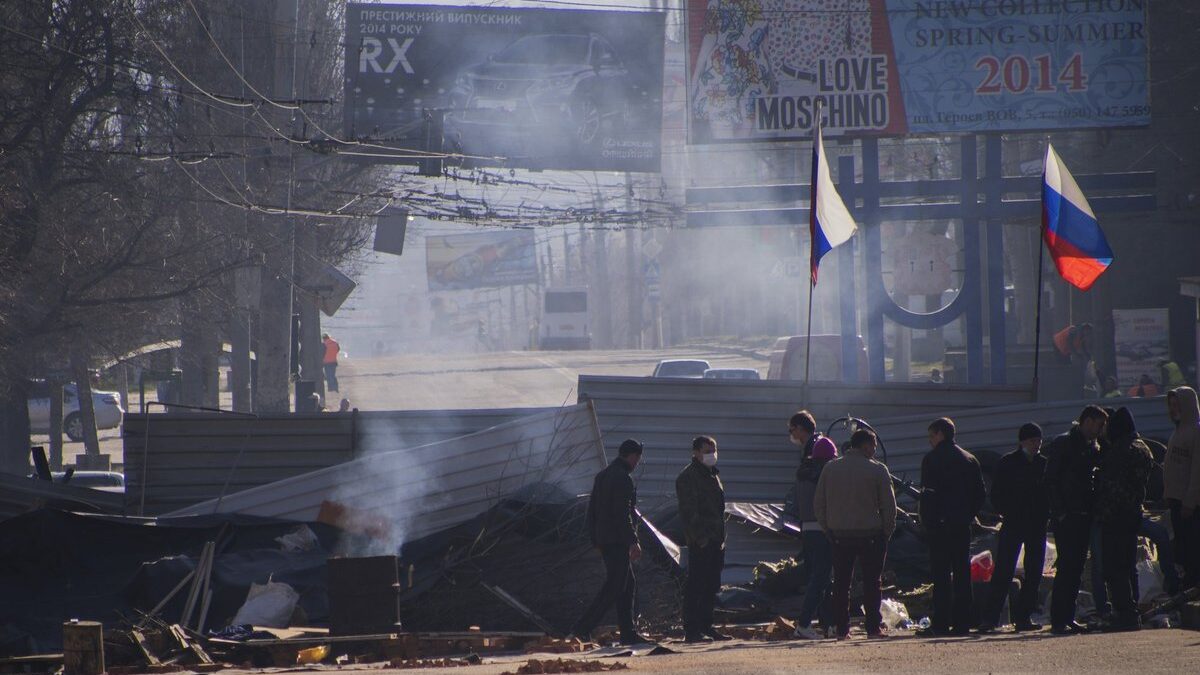
Russia used this scenario in April 2014 in Luhansk (capture of the SBU building) and Donetsk (capture of the regional administration). Similar methodology can be implemented in the center of Europe with stunning speed.
- Phase 1 (Trigger and mobilization — Hours 0–24): The scenario is launched by an artificially created or utilized resonant incident (for example, a domestic conflict involving a migrant, a staged murder of a local activist, or harsh police detention of a right-wing sympathizer). Russian information networks (“Storm-1516”, Telegram channels) lightning-fastly spread deepfakes and calls for an immediate protest in the streets. In a regional center (for example, Dresden or Erfurt), a multi-thousand crowd gathers, demanding the resignation of the government, an end to support for Ukraine, and withdrawal from NATO.
- Phase 2 (Symbiosis of protest and special forces — Hours 24–48): The crowd is used as a human shield (classic GRU tactic from 2014). At this time, the core of pre-recruited “disposable agents,” local far-right radicals, and infiltrated Russian intelligence operatives (perhaps former military or PMC alumni) break through police lines and carry out kinetic capture of key administrative buildings (Landtag, local police department, telecommunication hubs).
- Phase 3 (Local fortification — Hours 48–72): Captured buildings are barricaded. Weapons are stolen from local police arsenals or supplied via smuggling (via postal services or criminal channels). Demands are proclaimed for the non-recognition of the federal government. Local police (Landespolizei), not prepared for armed conflict with their own citizens and demoralized by political pressure, retreat or remain passive.
Democratic Trap
The main calculation of Russian planners is that democratic states (and Germany in particular) are burdened by strict legal and institutional limitations that make a swift and rigid forceful response against “internal” protest practically impossible. This institutional paralysis is a key vulnerability to hybrid warfare in a closed space.
In Germany, ensuring internal security is the prerogative of the federal states. Regular state police (Landespolizei) do not have the weaponry and tactical training to conduct urban warfare against well-armed sabotage groups. Regional special units (SEK – Spezialeinsatzkommando) are small in number and oriented toward hostage rescue or arresting criminals, not storming barricaded government quarters surrounded by a crowd of civilian sympathizers.
The federal special unit GSG 9 (based in St. Augustin and Berlin) numbers about 400 fighters and is a highly effective counter-terrorism unit. However, it can act on the territory of a federal state only with the consent of that state’s government. If the regional government sympathizes with the protesters (or is paralyzed by fear), the deployment of GSG 9 will be blocked on a legal level.
The most complex aspect is the involvement of the Armed Forces (Bundeswehr) within the country. The Basic Law of Germany (Grundgesetz), historically, due to the memory of the Nazi past, maximally limits the use of the army within the state.
| Article of the Basic Law (GG) | Essence of powers | Limitations and reality of application |
| Article 35 (Amtshilfe – Administrative aid) | Allows the use of the Bundeswehr for the liquidation of natural disasters or especially serious accidents. | The Constitutional Court (2012) ruled that the army cannot use lethal force to suppress protests. This is strictly logistical support. |
| Article 91 (Internal threat – Abwehr einer Gefahr) | A state can request help from other states or the Federal Police to protect the constitutional order. | Help is limited to police functions. Armed forces are not automatically engaged. |
| Article 87a (Internal State of Emergency – Innerer Notstand) | Allows the Government to use the Bundeswehr with weapons to protect civilian objects and fight insurgents. | Extremely high threshold. Requires a consensus decision by the Federal Government. Can be overruled by the Bundestag. Never applied. |
In the event of the “German Lugansk” scenario, a catastrophic time lag will occur. While the federal government in Berlin spends weeks debating whether the situation in Dresden is grounds for introducing a “State of Internal Emergency” under Art. 87a, and whether this would violate human rights (since the opposition, particularly AfD, will block the decision in the Bundestag), Russian proxy forces will fully fortify the captured territories, bring in supplies, mine approaches, and organize defense.
Attempts by the German government to expand the operational powers of intelligence services (BfV and BND) through a new intelligence reform law (NDRefG) face fierce resistance from the opposition and human rights activists, who see this as a threat to civil liberties. This confirms once again: democracy is used by Russia as a vulnerability.
CONSEQUENCES OF DESTABILIZING GERMANY FOR NATO AND EU ARCHITECTURE
Hybrid destabilization of Germany is not a local problem of one country. Germany is the geopolitical, economic, and logistical center of gravity of Europe. The success of the Russian scenario will lead to a domino effect that will endanger the existence of the entire Euro-Atlantic space.
- Logistical collapse and winding down of the Eastern Flank defense: Germany is a key transit hub for moving NATO troops, American weaponry, and humanitarian aid to Poland, the Baltic states, and Ukraine. If infrastructure (railways, bridges, warehouses) is captured by rebels or paralyzed by constant acts of sabotage, supplies to the Eastern Flank will stop. Logistics will turn into a geopolitical “chokepoint.”
- Political implosion of the European Union: The federal government, busy overcoming an armed uprising on its own territory and fighting a constitutional crisis, will completely lose its foreign policy agency. Germany will not be able to act as a leader in imposing new sanctions against the RF or allocating macro-financial aid.
- Paralysis of NATO Article 5: Internal hybrid destabilization, disguised as civil protest (“concerned citizens against Berlin’s policy”), does not fall under the legal definition of an external armed attack. This is a classic “gray zone.” NATO will not have consensus to activate Article 5, which will publicly and irrevocably prove the ineffectiveness of the Alliance and allow Russia to continue its expansion.
Conclusions
The Russian Federation has moved from the concept of conventional war to a strategy of global hybrid implosion. Instead of attacking NATO borders with tanks, the Kremlin, purposefully and systematically, like boiling a frog, increases the degree of internal tension in European Union countries.
By drawing clear parallels, we see that the dynamics of Russian information policy before 2014 in Ukraine and before 2026 in the EU are identical: artificial polarization of society, the formation of distrust in the central government, the hyperbolization of fears, and the cultivation of radical political proxy forces. To implement physical destabilization, the RF is mass-recruiting networks of “disposable agents” via social platforms, using migrants and marginalized youth as a base. These groups are ready to act as a vanguard during future crises. Drone incursions into NATO territory serve as a catalyst for psychological breakdown, proving the weakness of the West and inclining the audience to capitulation.
The modeled scenario of “German Lugansk” demonstrates that the strongest democracies are the most vulnerable. Bureaucracy, constitutional restrictions on the use of the army (Grundgesetz Art. 35, 87a, 91) and political polarization will inevitably lead to a time lag, which will allow pro-Russian forces to carry out local fortification.
Destabilization of Germany will mean the logistical and political collapse of the entire NATO and EU architecture. To counter this threat, European states need to:
- Urgently adapt their legislation and constitutional frameworks to overcome hybrid insurgencies in a closed space (CS-TMO);
- Rethink doctrines of using force and police (SEK/GSG 9) interaction with the Armed Forces (Bundeswehr);
- Stop treating sabotage as isolated criminal offenses, recognizing this as a full-fledged war of annihilation in a closed space;
- Introduce proactive counter-intelligence measures to detect and neutralize networks of “disposable agents” in messengers and crypto-financial channels.
Institute of Social Dynamics and Security Kronos
The investigation actively used OSINT tools and artificial intelligence, in particular Gemini and Grok models. OSINT methods made it possible to collect and analyze open data from various sources, including social networks, public databases, and web resources. Gemini provided in-depth analysis of textual data, pattern detection, and forecasting, while Grok, created by xAI, was used to process complex queries and generate accurate conclusions based on large volumes of information. The combination of these technologies made it possible to significantly accelerate the investigation process, improve the accuracy of the results obtained, and identify connections that might have remained unnoticed by traditional methods.